

Can Travel Pillows Get Moldy? How to Store Them Properly
Travel pillows spend most of their life stuffed into luggage, pressed against sweaty necks, and sealed away in dark bags. That cycle creates conditions where mold thrives. Here is how to tell if your pillow has a problem, how to prevent one, and when to replace it.
Quick Answer: Yes, Travel Pillows Can Get Moldy (And How to Stop It Fast)
Travel pillows can develop mold due to trapped moisture. Sweat, drool, spilled drinks, and the humid air inside airplane cabins soak into fabric covers and fill materials during a single flight or long road trip. If you stuff that damp pillow back into a bag without drying it, you have created a warm, dark, enclosed space where mold spores germinate. Storing damp travel pillows creates ideal conditions for mold growth, and the musty smell can appear in as little as two days.
The fix is a set of habits, not a single product. After every trip, fully air out your pillow in a ventilated room before packing it away. Use a removable cover and wash it regularly to strip away sweat and body oils that feed mold colonies. Never seal a still-damp pillow in your carry on or luggage. At home, store it in a breathable cotton or mesh bag rather than a plastic bin.
Prevention matters because rescue is hard. Once mold penetrates porous materials like memory foam, cleaning the core without damaging it is nearly impossible. A memory foam travel pillow with deep mold growth is safer to replace than to scrub. The same applies to microbead cores where moisture has been trapped long enough to produce visible spots or a persistent earthy odor.
How Mold Actually Grows in Travel Pillows
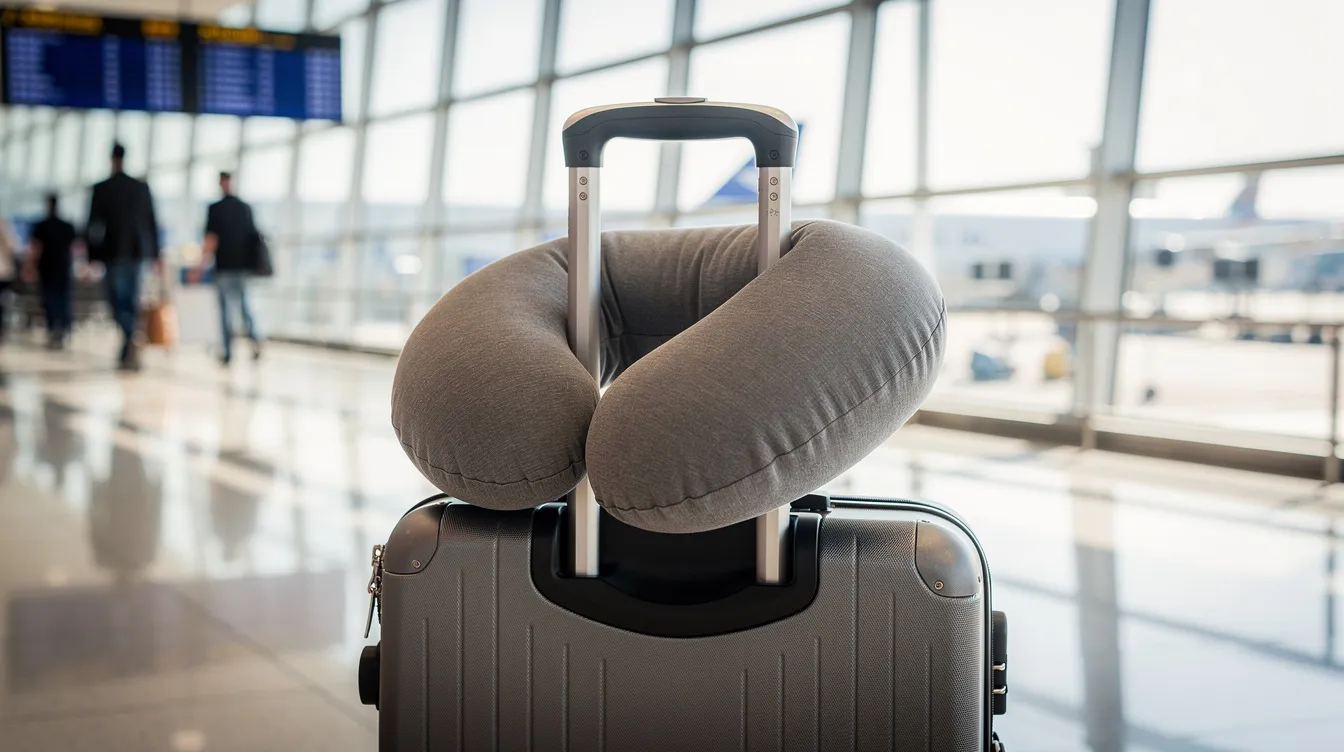
Mold spores float in virtually every indoor environment. They stay dormant until they land on a surface that gives them three things: moisture, organic nutrients, and still air. Travel pillows deliver all three. Your skin sheds oils and dead cells onto the fabric. Sweat and body oils provide nutrients for mold growth. And travel pillows are often packed away in dark and enclosed spaces like backpack pockets, overhead bins, and zippered suitcase compartments where air barely circulates.
The Canadian Conservation Institute notes that mold thrives in warm and humid conditions, specifically when relative humidity exceeds about 65% and temperatures stay above 24°C (75°F). Mold can form on untreated organic materials within 48 hours at 80% humidity. Closed-cell foams and tightly packed microbeads make the problem worse because they trap moisture inside where airflow cannot reach it.
Picture a red-eye flight: you sleep for five hours, your neck sweats against the pillow, and at landing you stuff it into your bag. The pillow sits in that sealed space for two days while you explore your destination. By the time you unpack, the foam core smells like a damp towel. That smell is the early stage of microbial colonization. The same thing happens if a U-shaped pillow rides in a hot car trunk beside a leaking water bottle, or if you wash a cover and zip it back onto a core that is still half wet.
Which Travel Pillows Are Most Likely to Get Moldy?
Travel pillows come in various shapes like horseshoe and J-shape, and each shape uses a different fill material. Mold risk depends less on the shape and more on what is inside.
Memory foam pillows sit at the top of the risk scale. Dense foam absorbs moisture at the surface and holds it deep inside the cell structure, where drying can take 24 to 48 hours even with decent airflow. Solid (non-shredded) memory foam is the slowest to dry. If the pillow has thick foam concentrated on one side, that section becomes a cold spot that stays wet long after the rest of the pillow feels dry.
Microbead pillows occupy the middle ground. The polystyrene beads themselves do not absorb water, so the risk comes from the shell fabric and the humid air trapped between beads. A breathable cotton or mesh cover lets moisture escape; a tightly woven, plastic-feeling shell traps it. If you store a microbead pillow in a non-breathable bag after a sweaty flight, moisture lingers between the beads even though the beads are inert.
Inflatable pillows are lightweight and compact for easy packing, and they carry the lowest mold risk in the core because there is no absorbent fill. Inflatable pillows are usually cheaper than memory foam options, too. Their weak points are the fabric cover, the valve, and the seams, all of which can collect condensation. Rolling an inflatable pillow up while the surface is still damp creates small pockets of trapped moisture along the folds. For shoppers comparing different types, look for pillows treated with certified antimicrobial agents; ISO 20743 measures antimicrobial activity on textile products, and a certification mark on the label is a concrete indicator of mold resistance.
Spotting the Warning Signs: Early Mold vs. Normal Wear
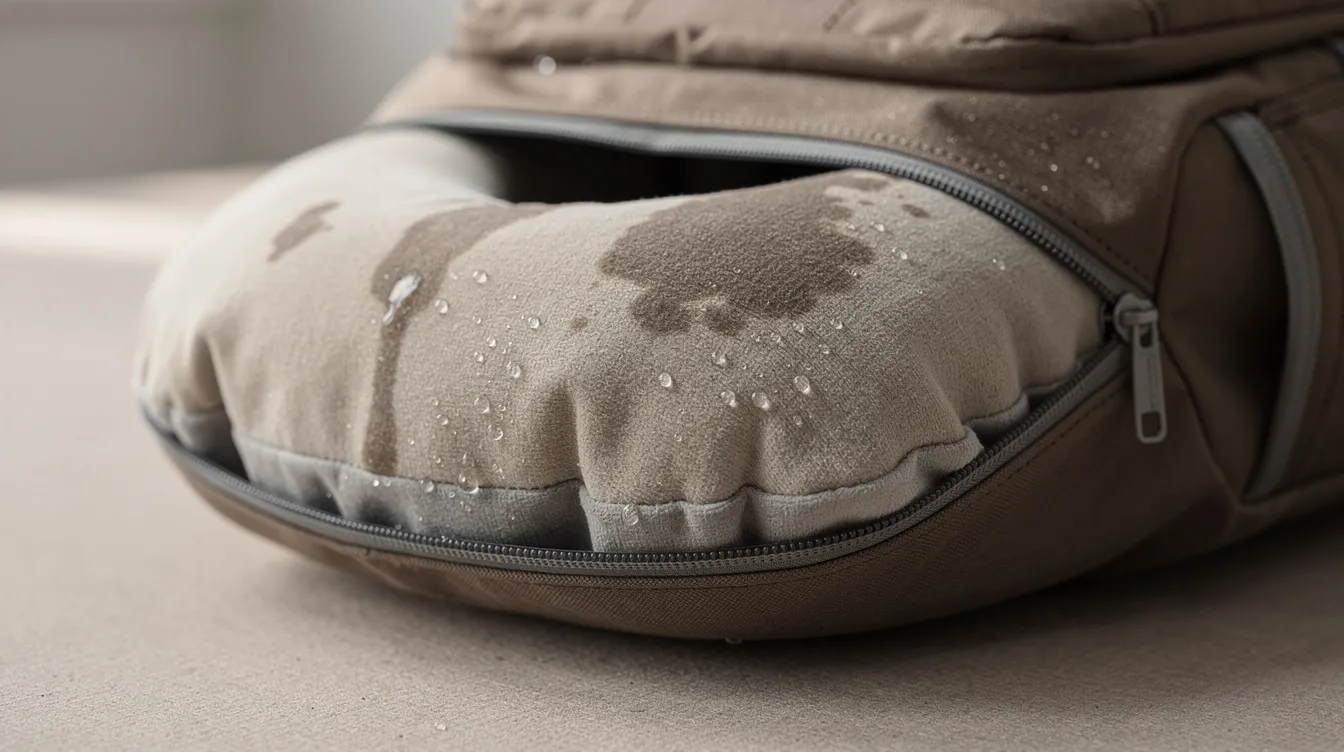
Black, green, or gray specks clustered in patches are the clearest visual sign of mold. Fuzzy or velvety texture on the surface, circular stains that spread outward, and dark blurs visible under the cover at seam lines all point to active growth. A stubborn musty or earthy smell that returns after washing the cover is another reliable indicator. Travel pillows should be inspected regularly for signs of mold, especially after trips to humid destinations.
Normal wear looks different. Sweat stains and body oil discoloration tend to be yellow or light brown, uniform in spread, and flat to the touch. They do not produce a fungal odor. Mold, by contrast, is speckled, patchy, and often concentrated on the side of the pillow that contacts skin most. Side sleepers and forward nodders who press their mouth and nose into one zone will notice mold developing there first. The Bcozzy pillow, for example, supports forward nodders by cradling the chin, which means saliva and breath moisture collect along that chin cup area and should be checked after every use.
A quick inspection routine helps: hold the pillow under bright light, unzip the cover to expose the core, and press your nose close. If you smell something damp or earthy after a flight or after storage, investigate further. People with allergies, asthma, or chronic neck issues should treat any persistent odor as a replacement signal, since mold exposure can worsen respiratory symptoms and skin irritation.
How Different Pillow Materials Handle Moisture and Mold
Memory foam absorbs moisture slowly through its open-cell structure and releases it just as slowly. Once water penetrates deeper than the surface layer, it sits in the middle of the foam where air cannot reach. Mold can penetrate porous materials, making it hard to clean without destroying the foam itself. Porous materials in travel pillows can absorb moisture and retain it for days if airflow is restricted.
Microbead fills behave differently. The beads are solid polystyrene and repel water, but the spaces between beads hold damp air the same way gravel holds moisture between stones. A breathable shell lets that trapped air escape; a shell made of dense polyester or coated fabric seals it in.
Polyester fiberfill and down-alternative fills dry faster than foam because synthetic fibers wick moisture outward and allow airflow between strands. Most polyester-fill travel pillows are machine washable, which makes regular cleaning realistic. The catch is that washing without fully drying can leave damp clumps in the center of the fill.
Inflatable designs have no absorbent core at all. Their mold risk is limited to surface contamination on the fabric shell, valve, and fold lines. A simple wipe-down and open-valve airing after each use keeps them clean.
Best Cleaning Practices to Keep Mold Away
Spot clean memory foam pillows with a damp cloth and mild soap. Never fully submerge a memory foam core or put it in a washing machine; water soaks deep into the cell structure and can sit long enough to grow mold before the foam dries. Blot the surface, rinse lightly, press moisture out with a dry towel, and let the core air dry flat with space on all sides.
Removable covers should be washed regularly to reduce mold risk. The Sleep Foundation recommends washing covers in warm or hot water (above 54°C / 130°F if the fabric allows) with a mild detergent. Avoid heavy fragrances or bleach, which can degrade elastic fabrics and foam over time. Wash pillow covers regularly to prevent oil buildup from skin contact, since those oils are nutrients that mold feeds on.
For microbead pillows, check the manufacturer's label before washing. Some shells tolerate a gentle machine cycle; others require hand washing only. After washing, use a gentle spin to remove excess water and then air dry completely. The bead core should feel loose and dry before you reassemble the pillow.
Inflatable pillows need the least effort. Wipe the outer shell with a cloth dampened in mild soapy water, open the valve to let air circulate inside, and let both surfaces dry before rolling the pillow up. Thorough drying is more important than washing frequency; a pillow washed once a month and dried completely is safer than one washed weekly and stored slightly damp.
How to Dry Travel Pillows Thoroughly After Trips
Travel pillows should be aired out after use to prevent mold. The simplest method is laying the pillow flat on a clean towel in a well-ventilated room, with a fan pointed at it to keep air moving. If your pillow has a hanging loop, hook it on a door handle or clothesline where air circulates on all sides.
High heat damages memory foam. Radiators, direct heating vents, and hot dryers break down the foam's cell structure, causing it to lose its shape and support over time. Memory foam pillows can retain heat during use, and forcing more heat into the material during drying accelerates degradation. Stick to room-temperature airflow or a dryer on the lowest heat setting for covers only.
For thick U-shaped memory foam cores, flip and rotate the pillow every few hours during drying so the inner curve does not stay damp. A dense memory foam travel pillow can need a full day or more to dry through. Press the center of the foam with a clean finger; if it feels cool or damp, wait longer.
A concrete benchmark: covers and thin fills should dry within a few hours of open-air exposure. Dense foam cores need at least 24 hours. Never pack a pillow until both the cover and the insert feel completely dry to the touch.
Smart Storage: How to Store Travel Pillows Mold-Free Between Trips
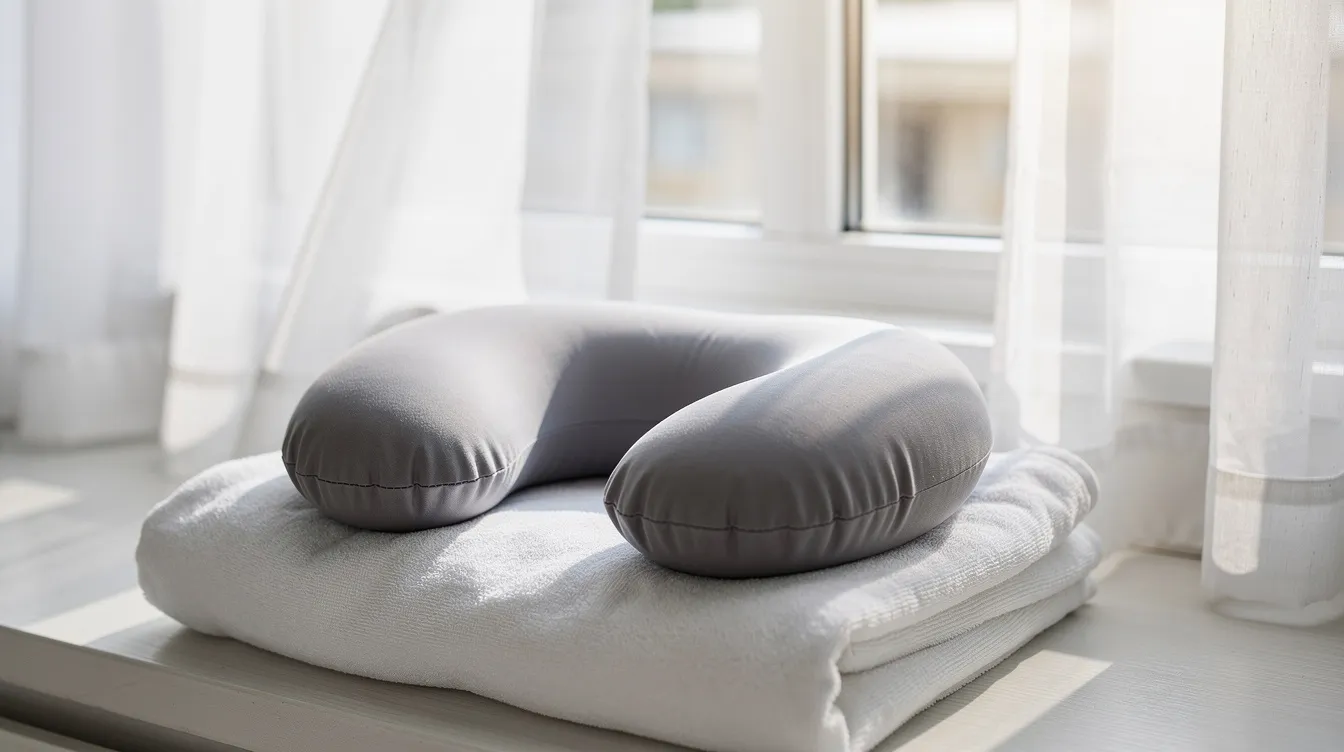
Once the pillow is clean and dry, store it in a breathable cotton bag or mesh pouch. Breathable storage methods should be used for travel pillows because trapped humidity in an airtight container or plastic bag can restart the mold cycle even weeks later. A cotton pillowcase works as a low-cost substitute if you do not have a dedicated bag.
Location matters. Closets that share a wall with a bathroom, damp basements, and uninsulated attic spaces all expose stored fabrics to humidity swings. Humidity levels should be kept at 50% or lower to prevent mold in your storage area. A shelf in a dry room with stable temperature (around 20 to 25°C) is the safest spot.
Use moisture-absorbing packets inside pillow protectors to reduce humidity. Tossing a silica gel packet or a small charcoal bag into the storage pouch pulls residual moisture from the air around the pillow. This step makes a big difference for travelers in tropical or coastal climates, where ambient humidity is high year-round. Moisture-absorbing packets can lower humidity around pillows enough to keep spore germination below the threshold.
Frequent travelers who keep a go bag with their clothes, luggage, and pillow packed and ready should still pull the pillow out at home between trips. Even if it lives next to your carry on most of the time, a few hours of open air and light prevents the sealed, dark environment mold needs.
Memory Foam vs. Other Travel Pillows: Mold Risk and Neck Support
Memory foam pillows provide superior neck support during travel. The foam contours to your neck shape and holds spinal alignment in a way that inflatable options and loose-fill pillows cannot match. For travelers who deal with neck pain on long trips, memory foam is often the right pillow. But that dense, body-conforming structure is also the reason foam holds moisture so stubbornly. The trade-off is real: the best pillow for comfort demands the most careful maintenance.
Inflatable pillows sit at the other end of the spectrum. They weigh almost nothing, collapse to a fraction of how much space a foam pillow occupies, and dry in minutes because there is no absorbent fill. Travelers who pack only a small carry on or an extra bag for a weekend trip often prefer inflatable options to minimize weight and moisture hassle. Head support is less rigid, though, and most people with neck issues find inflatable pillows too soft for rest on a red-eye seat or a long car ride.
Microbead pillows balance comfort and mold risk. The fill gives adjustable, soft support without trapping as much heat as foam, and the pillow size tends to be compact enough to fit in a bag without compressing permanently. Choose a pillow based on your sleeping position during travel; side sleepers often need firmer support than what microbeads offer, while back sleepers and forward nodders find the fill conforms well. Travel pillows should match your travel type for optimal comfort, and whatever you choose, the storage and drying habits outlined above matter more than the material alone.
Microbead Travel Pillows and Mold: Why Ventilation Matters
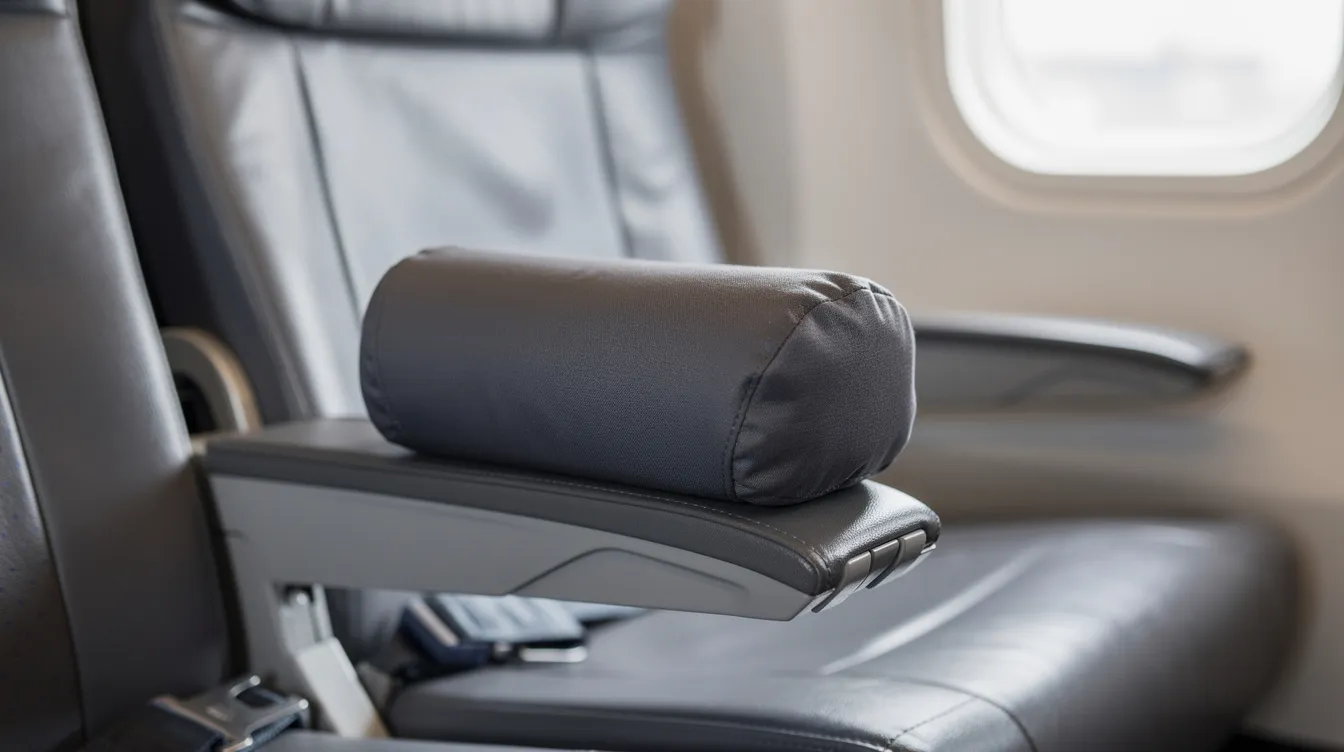
The tiny polystyrene beads inside a microbead pillow do not absorb water. Mold risk comes from the shell fabric and the humid air caught between beads. A tightly woven, plastic-feeling cover acts like a moisture wicking barrier in reverse: it keeps humidity in rather than letting it escape. A soft, breathable shell made of cotton or knit fabric allows damp air to pass through and evaporate.
The Travel Fanatics Mini Microbead Travel Pillow is a compact option with a soft, breathable shell that makes airing out between trips straightforward. Its small pillow size means the core dries faster than larger, denser alternatives, and it does not take up half your bag.
For any microbead pillow, avoid crushing it into a tight, non-breathable pocket or compartment after a flight. Air it near a window or a fan for at least an hour when you reach your hotel room or home. If the cover is removable, pull it off and wash it after every second or third trip. These small steps keep the fill loose, the shell fresh, and mold away from the other side of the fabric where it hides.
When to Replace a Moldy Travel Pillow (Final Verdict)
Visible mold spots on a memory foam core or a persistent musty odor that returns after washing are clear signals. Mold that has penetrated into porous foam or dense fill is not coming out with surface cleaning. Visible spots or musty odors indicate it is time to replace pillows rather than try to salvage them.
If the mold seems limited to an easily removable cover, a hot wash and full dry may save that layer. But inspect the core underneath. If the inner foam or bead shell smells earthy or shows staining, the contamination has spread deeper than the cover. Replacement is the safer choice for your health.
A simple decision rule: if you would not feel comfortable pressing your face into the pillow for hours on your next trip, or if it consistently triggers sneezing, skin irritation, or congestion, it is no longer the best pillow for travel days. Do not wait; the stress and pain of sleeping on a contaminated pillow are not worth saving a few dollars.
Final verdict: travel pillows can get moldy, but most travelers will never face the problem if they dry their pillow after every use, wash covers regularly, and store everything in a breathable space. Whether you prefer memory foam for its support, inflatable for its lightweight convenience, or microbeads for a balance of both, the habits are the same. Keep it dry. Keep it aired. Keep it clean.


