
How to Dry Clothes in a Hotel Room Overnight
Lightweight garments may dry overnight in a hotel room when you remove excess water thoroughly and give them steady airflow. Drying time still depends on the fabric, room temperature, humidity, and how wet the clothing is when you hang it.
Here is what this guide covers:
- You will learn exactly how to dry clothes in a hotel room using a 7 p.m. to 7 a.m. timeline that fits around your sleep schedule.
- The towel-roll method removes more moisture before hanging than wringing alone, cutting drying time by hours.
- Certain spots in a hotel room are safe and effective for hanging wet clothes, while others risk damage or safety issues.
- Lightweight fabrics have a better chance of drying overnight, while heavy cotton may take much longer.
- If clothes are still damp at checkout, a few quick fixes can make them wearable or keep them separated until your next stop.
What Can Actually Dry Overnight in a Hotel Room?
If you want to dry clothes in a hotel room overnight, start with realistic expectations. Hotel rooms vary widely in temperature, humidity, and airflow. Lightweight items have the best chance of drying overnight, while thick garments may still be damp in the morning.
Underwear, thin socks, lightweight T-shirts, and quick-drying travel clothes are the best candidates for overnight drying. Thick cotton hoodies, denim jeans, and bulky towels can take much longer. Success comes down to three factors: how much water you squeeze out before hanging, the fabric type, and how much surface area is exposed to moving air.
This guide focuses on giving clothes the best chance to dry overnight. Check seams, waistbands, and cuffs carefully in the morning because those areas often stay damp longer.
Overnight Timeline: 7 p.m. to 7 a.m. Drying Plan
7:00 to 7:30 p.m.: Wash and rinse. Use cool or lukewarm water and a small amount of travel laundry detergent. If detergent is unavailable, a tiny amount of plain shampoo may work in an emergency, but it can be harder to rinse. Gently wash each garment, rinse until no suds remain, and press out excess water without twisting the fabric.
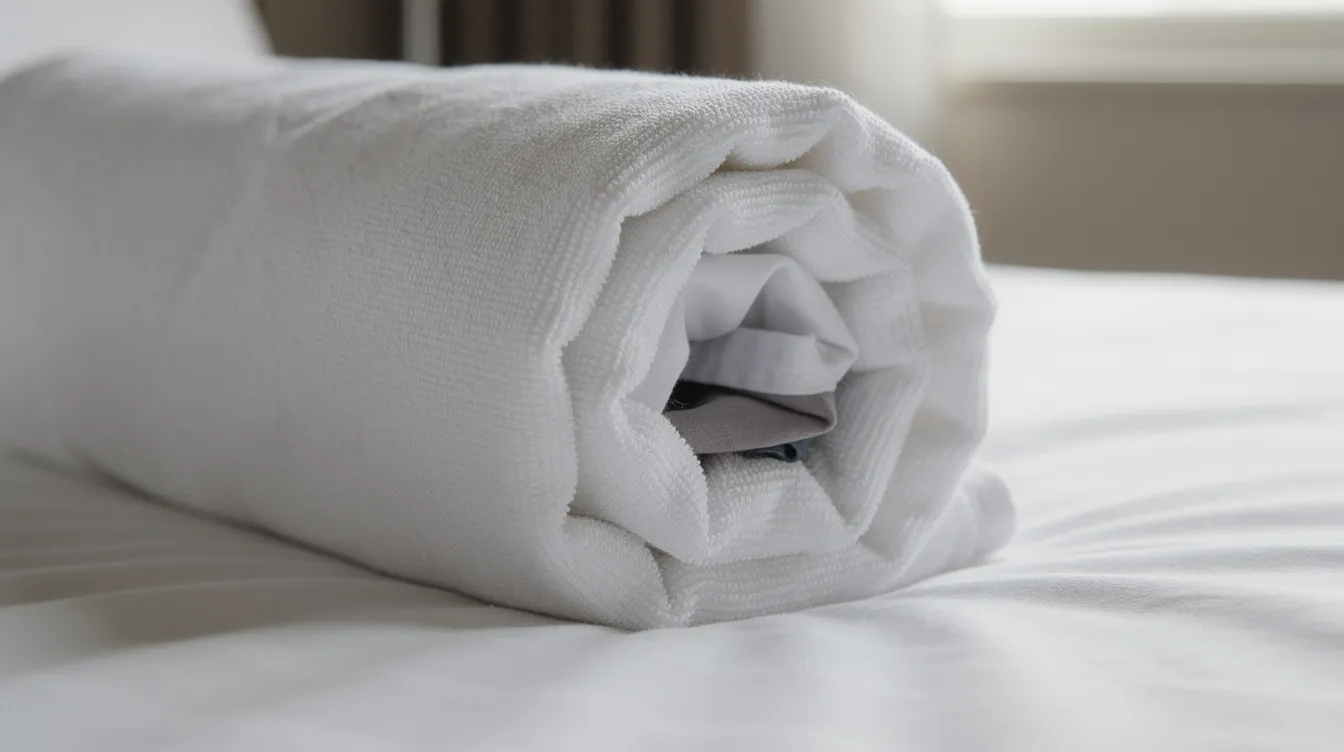
7:30 to 8:00 p.m.: Towel-roll. Lay each garment inside a dry towel, roll it tight, and press firmly. Details on this technique are below, but the point is to transfer water from the cloth into the towel before you hang anything.
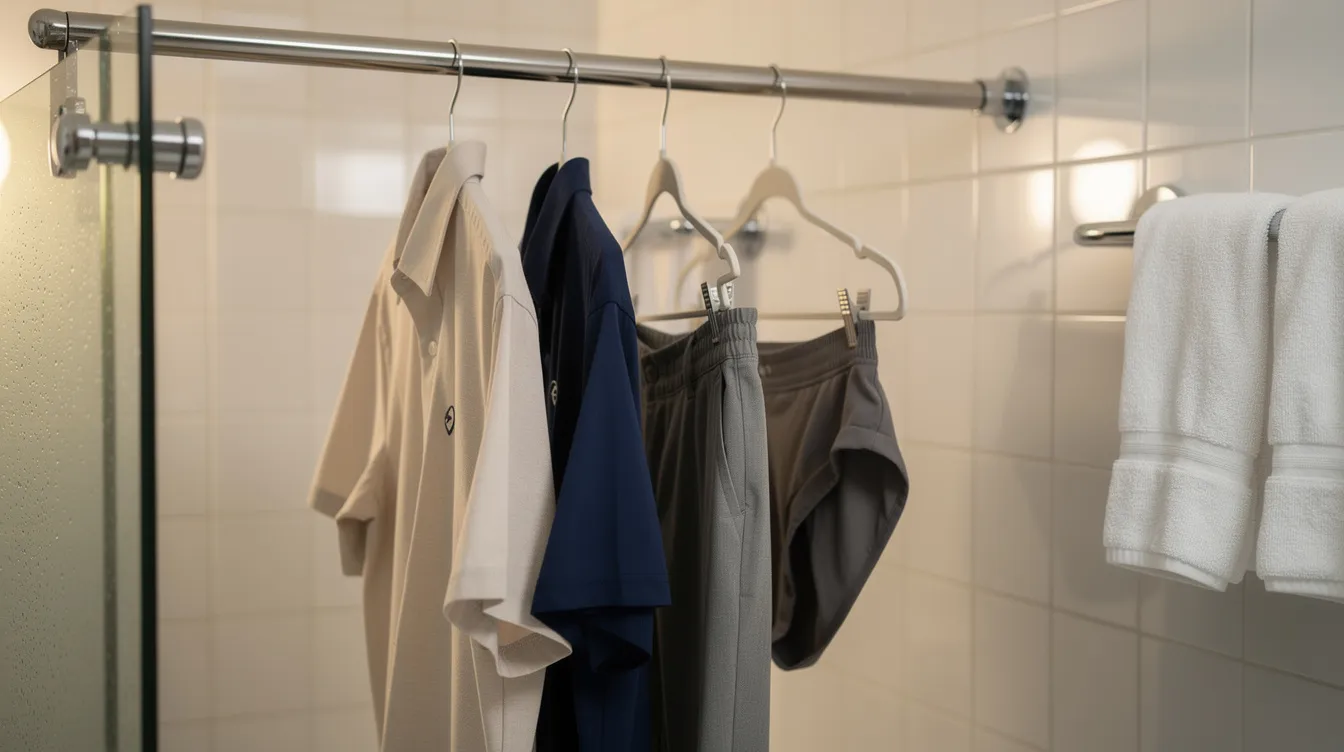
8:00 to 9:00 p.m.: Hang in final spots. Spread items across the shower rail, hangers on the closet door, or over a chair placed near the AC vent. Expose as much surface area as possible and avoid overlapping garments.
Before bed, around 10:00 to 11:00 p.m.: Flip and check. Turn each garment so the side that faced the wall or another item now faces open air. If clothes are in the bathroom, crack the door so moisture can escape into the main room instead of condensing back onto fabric.
Morning, 6:30 to 7:00 a.m.: Final checks. Check seams, cuffs, waistbands, and collars for remaining dampness. Reposition clothing near normal room airflow while you pack and keep anything still damp separate from dry clothing.
Following this routine gives lightweight clothing more time and airflow to dry before checkout.
Master the Towel-Roll Method to Speed Up Drying
How you handle clothes right after washing is the single biggest factor in whether they dry overnight. This technique works in any hotel room with a spare bath towel.
- Lay a large, completely dry bath towel flat on the bed or floor.
- Spread a single garment across the towel in one layer, no folds.
- Roll the towel into a tight cylinder with the garment inside.
- Kneel or stand on the roll, pressing section by section for 30 to 60 seconds each. You can also wrap and twist the roll firmly. The pressure forces water out of the fabric and into the towel fibers.
- Unroll and check. If the garment still drips, repeat the process with a second clean, dry towel.
A regular towel absorbs a surprising amount of water when pressure is applied evenly. After towel-rolling, garments should feel damp but not dripping.
Two cautions: avoid aggressive twisting on delicate fabrics like silk or lace, and never leave wet clothes sealed inside the rolled towel overnight. Leaving wet clothing sealed inside a towel can trap moisture and create unpleasant odors.
Safe Places to Hang Clothes in a Hotel Room
Where you hang clothing matters as much as how you wash it. The goal is maximizing airflow without damaging hotel property.
Safest options:
- The shower rail or a pull-out clothes line in the bathroom.
- Hangers hooked over an open wardrobe or cupboard door.
- Towel bars for lightweight items like socks and underwear.
- The back of a chair positioned under an AC vent so air moves over the fabric.
Spread items apart. Crowding everything on one rail traps moisture between garments and leaves seams damp by morning.
Spots to avoid:
- Lampshades or light fixtures, where heat can scorch synthetics.
- Directly beneath smoke detectors or sprinklers.
- Wooden furniture surfaces or upholstered chairs, which can stain or warp.
- Blocking heating vents entirely, which may trigger HVAC issues.
If the room has a heated towel warmer or radiator, drape items loosely rather than bundling them. Check garment labels first. In winter, radiator heat can help clothes dry faster, but some synthetics melt under sustained contact.
Fabrics That Dry Fast vs Those That Stay Damp
Choosing the right garment to wash at night can decide whether you are waiting around in the morning or walking out the door on time.
Fast-drying fabrics have low moisture regain, meaning fibers hold very little water. Polyester sits at roughly 0.4 to 0.8% moisture regain, while cotton absorbs 7 to 8% of its dry weight. In practice, a lightweight polyester shirt can reach near dryness in two to three hours under good conditions, while a cotton garment of similar weight may need eight to ten hours.
Dry quickly overnight: thin polyester blend tees, nylon underwear, merino wool base layers, lightweight travel dresses.
Stay damp well past morning: heavy cotton jeans, thick hoodies, bulky cotton socks, dense denim. One traveler on Reddit noted that jeans can take two full nights in a hotel room to dry.
If you pack specifically for sink washing, build your travel wardrobe around quick-dry pieces. Lower fabric weight in GSM means faster drying time, which is a useful idea to carry into every trip you plan.
What to Do if Clothes Are Still Damp in the Morning
Even with perfect technique, some items may still feel cool or slightly damp at 7 a.m., especially in a humid coastal hotel or an older room with poor airflow.
If only seams, waistbands, or cuffs are damp, grab the hair dryer. Hold it several inches away, keep the air moving, and concentrate on thick areas for five to ten minutes total. That removes enough moisture to make the garment wearable.
For fabrics that can handle heat, an ironing board and iron pressed through a thin dry cloth can pull out residual dampness while smoothing wrinkles. Skip this for technical synthetics that could melt.
Quick air-boosting tricks: prop the room door or window open briefly while you pack, or reposition clothes near the vent for 15 to 20 minutes.
If clothing is still damp, keep it separate from dry clothes and allow it to finish drying as soon as possible. Once it is dry, the Wash Me Wear Me Laundry Bag can help separate clothing that is ready to rewear from clothing that still needs washing.

FAQs About Drying Clothes in a Hotel Room Overnight
These questions cover edge cases beyond the main timeline, from safety to etiquette.
Is it okay to use the hotel hair dryer to dry clothes?
Yes, for a few minutes on seams and small garments. Keep the dryer moving, hold it several inches from the fabric, and never leave it running unattended. Avoid pressing it directly against synthetics, which can melt. Early morning use can be noisy, so keep sessions short if walls are thin.
How can I dry clothes overnight in a very humid hotel room?
Run the air conditioning or heating to lower room humidity. Space clothes widely, start washing earlier in the evening around 5 or 6 p.m. to gain extra hours, and stick to quick-dry fabrics. Heavy cotton in a humid apartment or hotel will not cooperate no matter what you do.
Can I hang wet clothes on hotel furniture or lamps?
Avoid wooden furniture, artwork, and lamps. Wood finishes can stain and warp, and lamps generate heat that may damage fabric. Instead, use plastic hangers on the shower rod, towel racks, or drape items over a chair covered with a dry towel.
Will housekeeping mind if I wash clothes in the sink every night?
Occasional sink washing is normal for travelers around the world. Rinse the basin after use, wring clothes so they are not dripping across the carpet, and keep the bathroom reasonably tidy. Most hotel staff will not mind as long as you are considerate.
What if my clothes are nearly dry but still smell a little musty?
Odor comes from residual moisture sitting in stagnant air. Hang the garment near a vent or open window while you are out for the day. If the smell persists, re-wash with a bit of detergent. Never seal slightly damp clothes in a plastic bag, which locks in the musty scent.
Before You Check Out
Do a final sweep of every hanging spot: the bathroom door, shower rail, window ledge, and any hangers you may have moved. It is easy to leave a pair of socks behind on a towel bar.
Plan your last night of laundry carefully. Avoid washing every essential item at once if you have an early departure. Prioritize only the pieces you must wear on travel day. Place fully dry clothes in your suitcase first, then keep any slightly damp items near the top or in a breathable bag so they can finish airing out at your next destination.
Leave used towels in one pile so housekeeping can see what was used, and wipe up any drips on the bathroom floor out of courtesy. Once you understand how to dry clothes in a hotel room overnight, it becomes second nature to pack lighter, wash as you go, and walk out each morning with fresh, ready-to-wear outfits.