
How to Stay Comfortable on a Long Flight Without Overpacking
Comfort on Long Flights Without a Bulky Carry-On
Picture yourself at the airport gate, about to board a 12 hour flight across the world. The person next to you is wrestling a giant U-shaped neck pillow, a full blanket, and a personal item so stuffed it barely zips shut. Meanwhile, you know there's a simpler way to handle this.
The truth about how to stay comfortable on a long flight is that it doesn't require hauling half your house through security. Cramped seats, recycled air, noise, and the struggle to fall asleep are real problems on long haul flights-but a carry on bursting at the seams isn't the solution. Neither is suffering through it with nothing.
Cabin temperatures fluctuate during flights, humidity drops to uncomfortable levels, and crossing time zones brings jet lag no matter how tough you think you are. The plan that actually works? A few compact, multipurpose items combined with smart clothing choices and simple in-flight routines. Whether it's your first long haul flight or your fiftieth, these tips to make your journey better don't require extra cost or extra luggage.
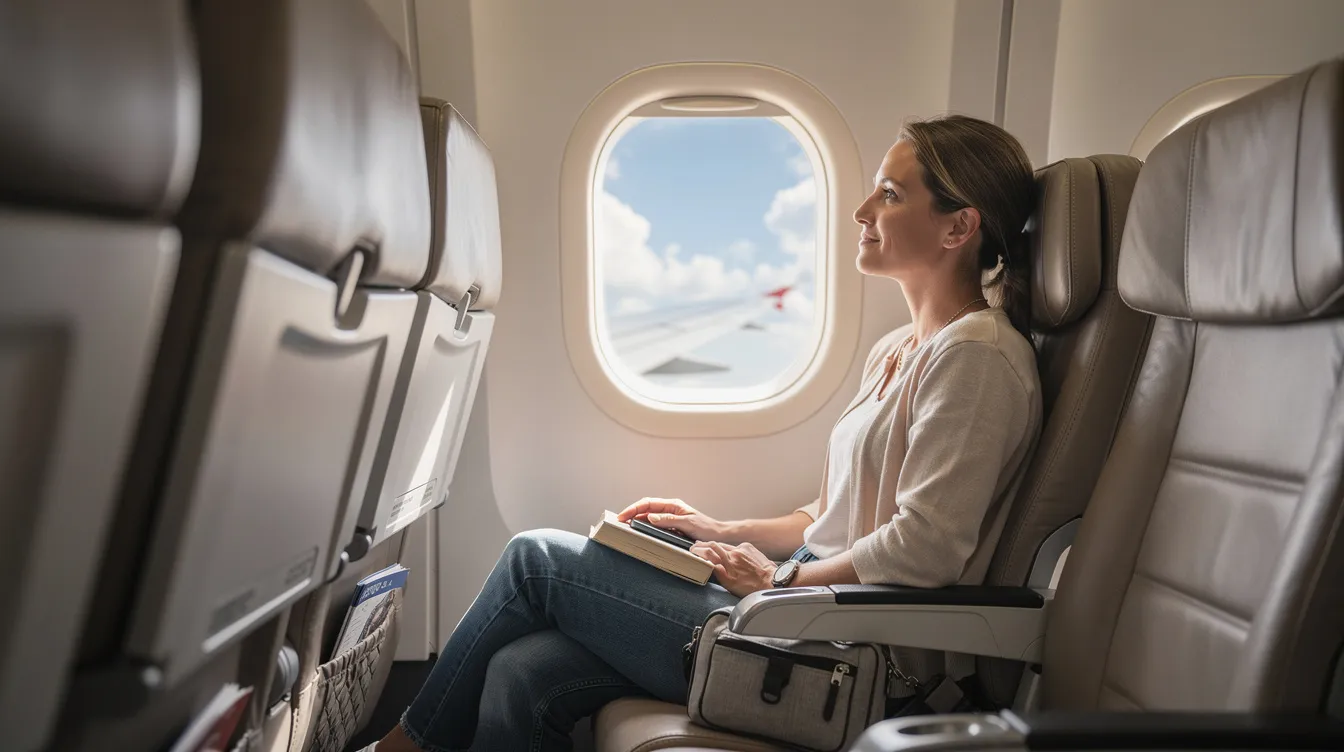
Choose Comfort Items That Earn Their Carry-On Space
On any long haul flight, every item in your personal item needs to justify the space it takes. The test is straightforward: is it small, lightweight, multipurpose, or does it solve a specific discomfort? If not, leave it behind.
Here's how that looks in practice:
- An eye mask weighs almost nothing and blocks light for hours. A full travel blanket takes up half your bag and duplicates what a good layer of clothing already does.
- A compact travel pillow fits in a tote. A bulky U-shaped neck pillow hangs awkwardly off your bag and barely fits under the seat.
- A tube of lip balm and a small moisturizer keep your skin comfortable in dry cabin air. A full toiletry kit is overkill for the plane.
A useful rule of thumb: if an item won't get used at least twice on a 6+ hour flight, it probably doesn't belong in your carry on. Pack a small comfort kit with essential items for flights-hydration helpers like a collapsible bottle or electrolyte packets, light and sound control like an eye mask and earplugs, and body support like a compact pillow or rolled-up sweater. That's the foundation. Everything else is negotiable.
Bring Small, Flexible Support for Your Neck or Lower Back
Economy seats are designed around averages, not your body. After a few hours of sitting, the thin cushioning and minimal lumbar support start making themselves known. Even a premium economy seat won't save you from stiffness on a 10 hour flight if you have nothing to adjust your position with.
A compact pillow earns its space because it moves with you throughout the flight. Tuck it behind your neck while trying to get some shut eye. Shift it to the lower back during meal service when you're sitting upright. Wedge it between your knees when you lean against the window seat wall. Slide it under your wrists while watching something on a tablet or using electronic devices. One item, four or five positions, hours of use.
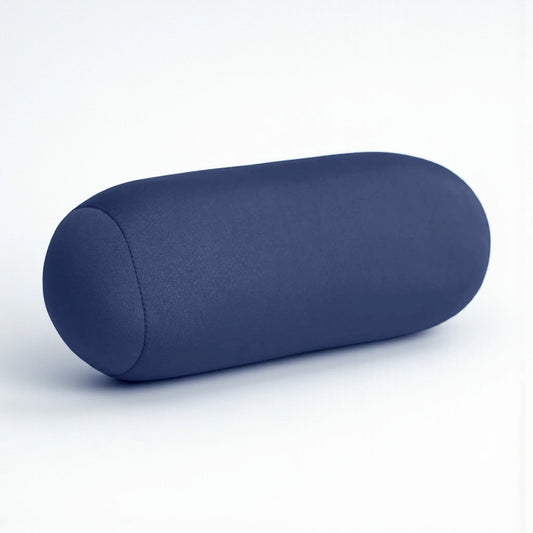
The Travel Fanatics Mini Microbead Pillow is a good example of what this looks like. It measures 3.5 inches in diameter by 8 inches long-roughly the size of a water bottle. It's filled with microbeads that shift for flexible cushioning and has a soft, stretchy nonremovable cover. You can position it behind your neck, head, lower back, knees, wrists, or shoulders. It's not a big U-shaped pillow. It fits into a tote, backpack, or medium handbag without dominating the space, and it works just as well on road trips or in hotel rooms when the pillow height isn't quite right.
Bring a travel pillow for neck support during flights, but make sure it's one that earns its footprint in your bag.
Dress in Layers Instead of Packing a Travel Blanket
Cabin temperatures can swing from warm and stuffy during boarding to genuinely cold at cruising altitude, especially on overnight red eye flights. Opt for layers to manage temperature fluctuations on planes instead of packing a separate blanket.
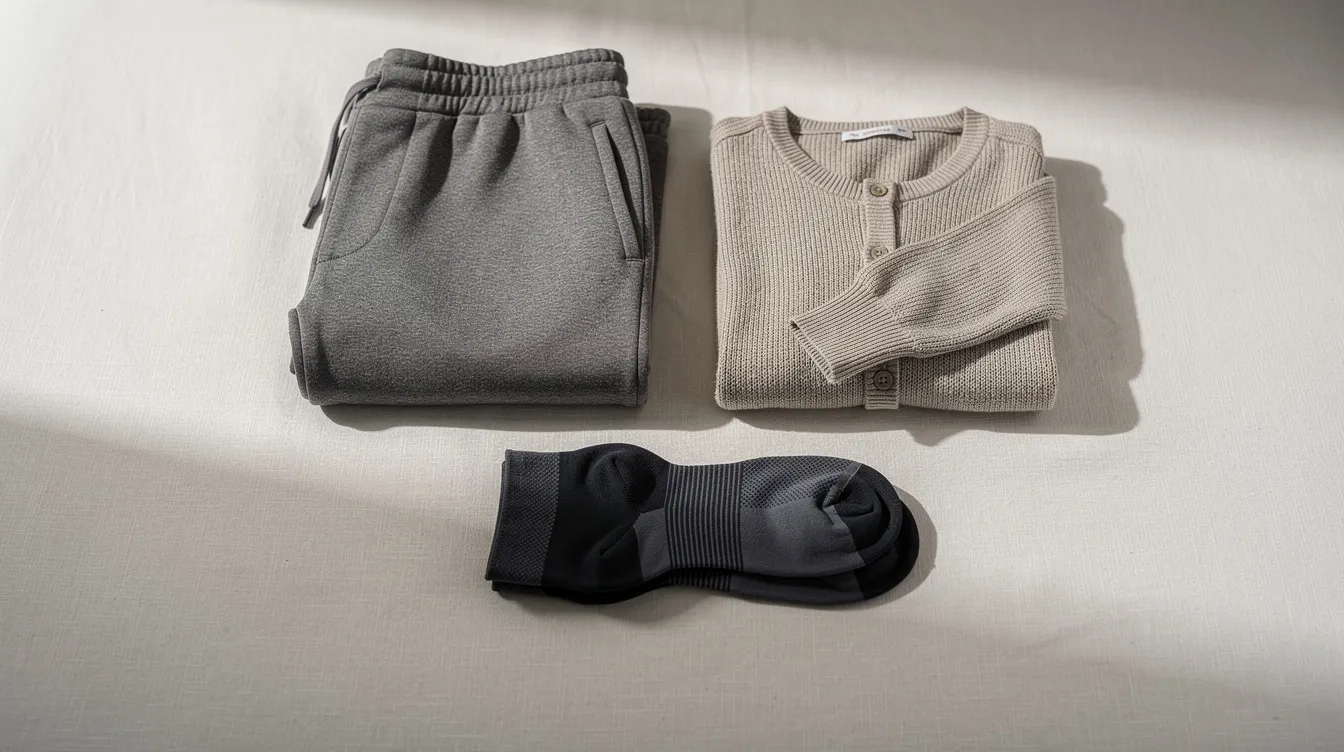
Here's a simple outfit formula for an 8–10 hour flight:
- Base: A breathable cotton or moisture-wicking T-shirt (modal and bamboo blends work well).
- Lower: Soft joggers, leggings, or relaxed-fit pants with stretch. Avoid tight waistbands to prevent discomfort during flights-stiff denim and rigid belts are the enemy after hour three.
- Outer: A light sweatshirt, zip hoodie, or cardigan that compresses small. A larger scarf or wrap can double as a blanket at your seat or a pillow when folded.
- Feet: Warm mid-calf socks for warmth once you slip off your shoes. Compression socks improve blood circulation during flights-15–20 mmHg is a standard range for most travelers, and they reduce swelling in your legs and feet.
Wear loose, breathable layers for comfort on long flights. Wear loose-fitting clothes for long flights. Your body will thank you when you land at your destination after sitting for hours in the same seat.
For footwear, closed-toe shoes like sneakers or loafers for the airport, then loosen or remove them once seated. Your feet swell during flight, and fighting against tight shoes for 11 hours is a losing battle.
Keep the Things You'll Actually Use Within Reach
Every trip to the overhead bin on a long flight means climbing over your neighbor (especially from a middle seat or window seat), disturbing people in the aisle seat, and breaking whatever rest you'd managed to settle into. Avoid it.
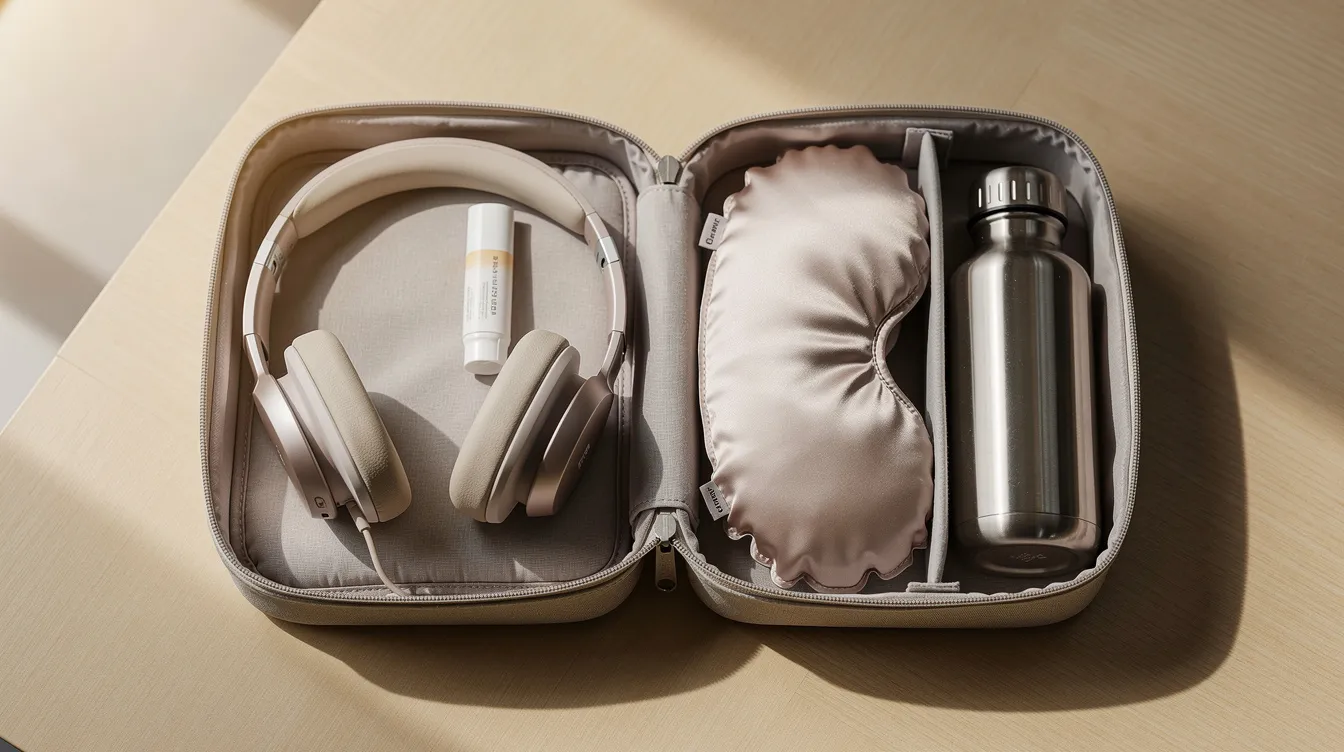
Before you board, organize the top of your personal item or pack a small zip pouch with everything you'll need during the flight. Items to keep within reach:
- Headphones (wired backup is smart if your wireless pair dies)
- Charging cables and a small power bank
- Lip balm and travel-size hand cream
- Refillable water bottle (empty through security, fill before boarding)
- A small snack-nuts, a granola bar, or dried fruit
- Medications you might need mid-flight
- Your compact pillow
- Eye mask and earplugs
- Facial wipes and tissues
Charge all devices before your flight so you're not scrambling at the gate. Bring snacks to avoid hunger during the flight, because airline meal service timing doesn't always match your body's schedule.
One organized pouch fits into the seat pocket without destroying your leg room. Keep the rest of your bag stowed. Overstuffing the seat pocket pushes into your knees and makes the tray table harder to use-limit it to one slim pouch and your water bottle.
Support Your Lower Back Before It Starts Hurting
On long haul flights, back pain tends to creep in after three to four hours of static sitting. By that point, your lumbar curve has flattened, disc pressure has increased, and everything stiffens up. The trick is setting up support in the first 30–60 minutes, before the discomfort even registers.
- Adjust your seatback to a slight recline when the seatbelt sign allows it. Even a few degrees reduces pressure on your spine.
- Place a small pillow, rolled sweater, or the mini microbead pillow at the natural curve of your lower back.
- Change your sitting position every 45–60 minutes. Alternate between slight recline, upright during meals, and gentle in-seat stretches.
A compact pillow migrates easily from neck support during takeoff to lumbar support while you're watching a movie, without any re-packing or overhead bin trips. The person who slouches with zero back support for six hours will feel like they've been flying for twelve by landing. Prevention is the entire strategy here.
Move During the Flight (When It's Safe to Do So)
Follow the flight attendants' instructions and respect the seatbelt sign, but take advantage of every safe window to stand and move on flights over four to five hours.
A realistic rhythm: walk the aisle every one to two hours on long flights, even if it's just a trip to the lavatory or the galley for water. Movement every hour or two reduces the risk of blood clots, and it shakes off that heavy, stiff feeling in your legs.
Simple in-seat movements help between walks:
- Ankle circles and calf raises
- Gentle shoulder rolls
- Shifting weight from one hip to the other
- Pointing and flexing your feet under the seat in front of you
Compression socks improve blood circulation during long flights and reduce swelling, especially on 10+ hour routes. If easy movement and bathroom access are a priority, book an aisle seat. Exit row seats provide extra legroom but have fixed arm rests, so weigh the trade-off. Either way, don't sit in the exact same position for the entire journey.
Reduce the Little Things That Make Long Flights Feel Worse
Comfort on a long flight often comes down to small annoyances that pile up. Here's how to handle each one.
Dehydration and dry air. Cabin humidity often drops to 5–15% during cruise, drying out your skin, eyes, and throat. Drink water frequently to avoid dehydration during flights. Hydrate well before and during your flight. Avoid excessive alcohol and caffeine to prevent dehydration-they accelerate moisture loss. Avoid fizzy drinks to reduce bloating on flights. Pack moisturizer to combat dry cabin air, and use a nasal spray to alleviate dry sinuses while flying. Even basic lip balm applied a few times makes a noticeable difference.
Noise. Aircraft cabins run around 70–85 decibels at cruise. Wear noise canceling headphones to reduce cabin noise-they genuinely improve the in-flight experience, whether you're sleeping or listening to something. Even affordable foam earplugs help. Load up white noise or an ambient playlist.
Light. Pack an eye mask to block light during sleep. Your neighbor's reading light, the cabin map display, or a bright window shade left open can wreck an attempt to fall asleep. A basic padded mask costs a few dollars and solves the problem.
Screens and sleep. Lower brightness on your phone and tablet, and give yourself a 30–60 minute screen break before trying to rest. Consider using sleep aids like melatonin for better sleep on red eye or overnight flights. Adjust your sleep pattern days before your flight by shifting bedtime closer to your destination's schedule, and use an app like Timeshifter to manage jet lag across time zones. Align sleep with the destination's time zone to reduce jet lag when you land.
Head position. Without support, your head falls sideways or forward, and the airplane ear pressure doesn't help matters. A small pillow or rolled scarf between your head and the window or seat wall gives you a consistent resting spot and reduces neck strain.
What to Pack for a Long Flight Without Overpacking
Here's a concise packing checklist for economy and premium economy travelers who want to stay comfortable without an overstuffed bag.
Comfort and sleep: Compact travel pillow (like a mini microbead pillow), lightweight eye mask, earplugs or noise canceling headphones, warm socks or compression socks. If you forget these, you'll feel it by hour four.
Health and hygiene: Pack a personal amenity kit for hygiene-travel-size toothbrush and toothpaste, facial wipes to refresh your skin, lip balm, small moisturizer, any essential medications, and healthy snacks like nuts, granola bars, or dried fruit.
Tech: Your phone, wired or wireless headphones compatible with the airline's system, one small power bank, a charging cable, and a compact universal adapter if you're flying international flights. Download movies and podcasts before your flight-in-flight entertainment systems can be unreliable, and you don't want to be stuck staring at the seat pocket for nine hours. You can save up to 200 TikTok videos for offline viewing if that's your thing. Bring a notebook or sketchpad to be creative during the flight when screens feel like too much.
Documents and extras: Passport, boarding pass, pen for landing forms, a small snack, an empty or collapsible water bottle to fill after security, and a light scarf or wrap.
The night before your trip, lay everything out and remove one or two "nice to have" items. If you want a deeper approach, check out The Ultimate Guide to Packing with Travel Fanatics Gear for a full framework.
Recommended Compact Comfort: Travel Fanatics Mini Microbead Pillow
A compact mini microbead travel pillow earns its carry on space by offering flexible support in a tiny footprint. Use it behind your neck on a 9 hour flight, tuck it into your lower back on a short connection, or bring it to a hotel to adjust pillow height.
Key specs:
- 3.5 inches in diameter × 8 inches long
- Filled with shifting microbeads for adaptive cushioning
- Soft, stretchy nonremovable cover
- Designed for neck, head, lower back, knees, wrists, or shoulders
👉 Travel Fanatics Mini Microbead Pillow
FAQ: Staying Comfortable on Long Flights
How can I make a long flight more comfortable?
Choose a seat based on your preference for moving or sleeping. Aisle seats allow easier access to the bathroom and make it easy to walk and stretch. Window seats prevent seatmates from disturbing your sleep. Choosing seats early increases your chances of preferred seating. From there, wear comfortable layers, stay hydrated, and bring a few compact comfort items like an eye mask, headphones, and a small pillow. Even without flying first class, these basics transform the experience.
What should I bring on a long flight?
A minimalist kit: eye mask, compact pillow, headphones or earplugs, charging cable, water bottle, healthy snacks, lip balm, moisturizer, and any medications. That covers rest, hydration, entertainment, and hygiene without overpacking.
Are travel pillows worth packing?
Yes-if they're the right size. Oversized U-shaped pillows eat up bag space and aren't always comfortable. Compact options like mini microbead pillows offer the same neck and back support in a fraction of the volume, and they can be repositioned throughout the flight for different needs.
How do you sleep more comfortably on an airplane?
Adjust your sleep pattern before your flight by shifting bedtime closer to your destination's schedule. Use an eye mask and earplugs or headphones, recline your seat slightly, and support your neck and lower back. A sleep aid like melatonin can help on overnight flights. Lower your screen brightness at least 30 minutes before trying to rest, and close the window shade if you're by the window.
What should I keep in my personal item during a long flight?
Keep your in-seat essentials accessible: headphones, charging cable, power bank, lip balm, water, snack, medications, pillow, and eye mask. Bulkhead seats offer extra legroom but may have downsides like no under-seat storage, so plan accordingly. The goal is zero overhead bin trips after you sit down-everything you need during the flight should be within arm's reach, tucked into the seat pocket or a slim pouch at your feet.
Comfort on Your Next Long Haul Flight
You don't need a suitcase worth of airplane accessories to stay comfortable on a long flight. A smart combination of layers, compact support, and simple routines covers the gap between suffering through it and actually arriving feeling like a functioning person.
Choose items that earn their space. Set up back support early. Move when you can. Stay hydrated. That's it-the rest is refinement.
On your next long haul flight, try one or two new habits instead of overhauling everything. Swap the bulky blanket for a proper layering system. Organize one slim in-flight pouch. If you're lucky enough to snag an empty row, even better-but these tips work from any seat. For travelers ready for one compact comfort upgrade, a small multi-position travel pillow is a practical place to start.