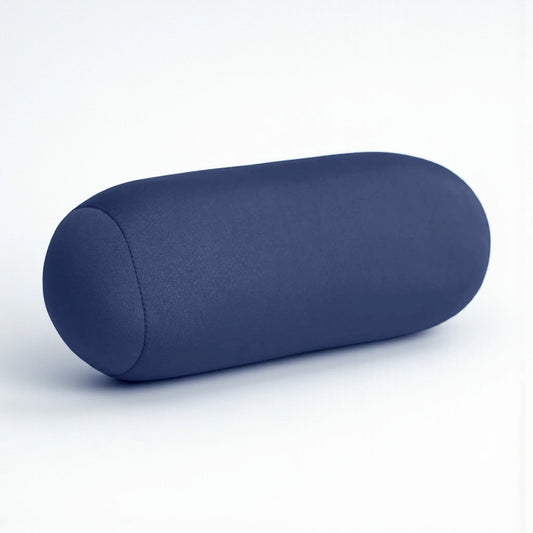

Microbead Travel Pillow: The Soft, Flexible Alternative to Memory Foam for 2026 Trips
A microbead travel pillow replaces the rigid mold of memory foam with thousands of tiny polystyrene spheres that shift, settle, and reshape as you move. For travelers tired of stiff neck pillows that trap heat or inflatable options that feel like sitting on a pool toy, microbeads offer a different approach to in-transit comfort.
Quick Answer: Why a Microbead Travel Pillow Might Be Your Best Travel Upgrade
A microbead pillow is filled with thousands of micro beads (typically expanded polystyrene, or EPS) packed inside a stretchy fabric shell. When you press your head or neck into it, the microbead filling flows to fill gaps between your body and the seat. The result is soft, adjustable support that molds to your neck and head position without locking you into a single posture.
Unlike a rigid memory foam neck pillow, a microbead travel pillow stays soft, breathable, and easily reshaped mid-flight for changing sleep positions. Memory foam retains heat because its dense structure traps warm air. Microbead pillows allow air to circulate freely between the beads, keeping users cooler. Inflatable pillows, meanwhile, can deflate unexpectedly or feel plasticky against skin. Microbeads avoid both problems.
For travelers who want a compact, best seller style option, the Travel Fanatics Mini Microbead Pillow delivers versatile neck support and head support without bulk. It fits into carry-ons, clips onto a bag handle, and works for neck, back, or side support across planes, trains, and cars. Microbead pillows provide soft, adjustable support for travelers who shift positions often and want a pillow that adapts rather than resists.
What Is a Microbead Travel Pillow?
A microbead travel pillow is typically a U-shaped or cylindrical pillow filled with thousands of tiny polystyrene or EPS micro beads inside a stretchy fabric shell. Each bead measures roughly 0.3 mm to 0.8 mm in diameter. Under pressure, the beads compress and shift; when you release, they resettle. This constant redistribution lets the pillow cradle your neck, head, or lower back in ways that a fixed-shape foam pillow cannot match. Microbead pillows mold around your body to fill the exact contour needed.
Common shapes include the classic U-shaped neck pillow that wraps behind the neck, cylindrical pillow microbead pillows (tube-style bolsters) used for lumbar support or under-knee cushioning, and mini rectangular styles for multi-position use. Compared to traditional polyester fiberfill pillows, microbeads remain more moldable and less lumpy over time. Poly-fill tends to clump into uneven pockets after repeated compression, while individual beads stay separated and distribute pressure across many small contact points. Microbead pillows are lightweight and portable for travel. Typical use cases range from long-haul flights and overnight bus rides to car trips, office power naps, and extra support on hotel chairs that lack built-in lumbar curves.

Spotlight: Travel Fanatics Mini Microbead Pillow (Our Go-To Compact Choice)
The Travel Fanatics Mini Microbead Pillow is built for travelers who refuse to sacrifice support for packability. At roughly 12 inches by 7 inches, it slips into a backpack side pocket or purse without crowding other essentials, yet provides enough surface area to cradle the neck, prop behind the lower back, or wedge between your shoulder and a plane window.
The soft, stretchy cover lets the dense microbead filling rearrange freely. You can scrunch it under your neck for sleeping upright, fold it in half for firmer neck support, or flatten it across the small of your back for lumbar support during a long car ride. The weight sits well under 8 ounces, so frequent flyers and commuters carrying it through terminals or subway stations notice negligible added load. This is a great product for minimalist packing, weekend city breaks, and digital nomads shifting between cafes and coworking spaces who need flexible, portable comfort without hauling a full U-shaped pillow.
See full details and colors on the Travel Fanatics Mini Microbead Pillow product page.
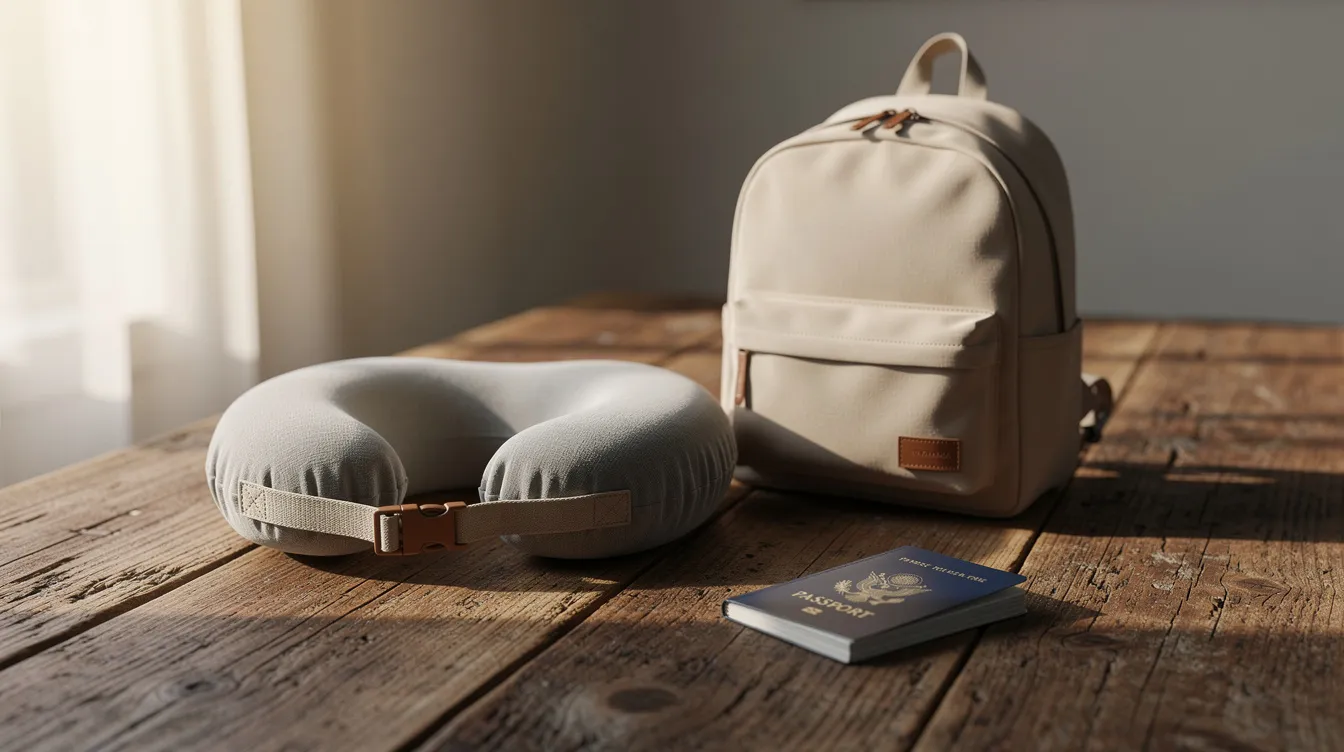
Microbead vs Memory Foam: Which Travel Pillow Fills Suit Your Sleep Style?
Memory foam became the default travel pillow filling because it contours under pressure and holds shape. That firm support works well for people who want structured 360-degree head support and plan to sleep in one position for hours. Memory foam provides firm support, and many travelers appreciate that rigidity.
The trade-offs are real, though. Memory foam can feel too warm for some users because its dense viscoelastic structure traps body heat. Once compressed, it does not reconfigure until temperature or pressure changes. A memory foam neck pillow also compresses only slightly when packed, eating carry-on space.
Microbead pillows offer flexibility compared to memory foam pillows. They are softer on first contact, cooler due to airflow between beads, and instantly moldable. Microbead pillows are less rigid than memory foam, which means they adapt to small positional shifts. On an overnight red-eye flight, a microbead pillow reshapes as you lean from the headrest to the window to an upright slouch. On a quick 45-minute commute, it provides soft support without the time needed for memory foam to warm and mold.
-
Memory foam pillow: holds shape firmly, feels warmer, compresses only 20-30% for packing
-
Microbead pillow: reshapes instantly, stays cooler, packs more flexibly around other items
Choose microbead if you dislike hard pressure under the chin or side of the jaw, if memory foam overheating bothers you, or if you prefer a bean-bag feel over a fixed contour. Choose memory foam if you want a pillow that locks your head in place and you sleep still.
Microbead vs Inflatable and Wrap-Style Travel Pillows
Inflatable pillows pack down to nearly zero volume, which makes them favorites among ultralight backpackers where every cubic inch of bag space counts. Wrap-style (scarf or band) designs lock the head in position to stop the bobbing that wakes you on turbulent flights.
Microbead pillows generally do not compress as dramatically as inflatable pillows, so they occupy more bag space. The payoff is real cushion-like comfort instead of a bouncy, plasticky feel. Inflatable models can squeak when you shift, feel uneven if over- or under-inflated, and transfer vibrations from the seat. Microbeads absorb those small movements.
Wrap-style pillows provide strong anti-head-bob support but can feel restrictive or hot around the neck and shoulders. They sometimes press against the jaw or throat, limiting circulation. Microbead pillows allow freer movement; you are not locked into one position, which matters on flights longer than a few hours.
Consider your seat type when deciding. Window-seat sleepers who lean sideways benefit from a microbead pillow that molds between head and fuselage wall. Aisle-seat travelers who need to stay more upright might consider a wrap for anti-bob support. Car passengers on road trips often prefer microbead bolsters behind the neck or lower back, where an inflatable would feel too bouncy against the headrest. For a plane seat where comfort outweighs minimal packing, microbeads win on softness and body-conforming feel.
Shapes and Styles: U-Shaped, Cylindrical, and Mini Microbead Pillows
Microbead pillows come in multiple shapes, each targeting a different support need. Picking the right shape depends on whether you need neck support, back support, or flexible lounging comfort.
The U-shaped neck pillow is the classic airplane design. It wraps around the back of the neck with arms extending behind each ear, often secured with a snap closure to prevent the pillow from slipping. This shape stabilizes the head during upright sleeping and reduces side-to-side wobble on turbulent flights.
Cylindrical pillow microbead pillows (bolsters or rolls) are long tubes. Place one vertically behind the lower back for lumbar support, lay it under the knees to relieve hip pressure, or rest an elbow on it during a tight-quarters flight. Bolsters are useful beyond travel; they work well in office chairs and on sofas.
Mini and rectangular microbead pillows are compact cushions. They are ideal for side sleeping against a window, tucking under one cheek, or propping up a tablet. Their one size fits most situations because they reshape to whatever gap you press them into.
A practical pairing: carry a U-shaped neck pillow for flights and keep a cylindrical bolster at your desk for daily lumbar support. The shapes serve different purposes and complement each other across a full travel-and-work day.
Materials and Construction: What's Inside a Quality Microbead Pillow?
Not all microbead pillows are equal. Quality depends on three things: bead size, shell fabric, and stitching.
The microbead filling consists of millions of tiny, lightweight polystyrene or EPS spheres. Smaller beads (closer to 0.3 mm) feel smoother against skin and distribute pressure more evenly. Larger beads (above 1 mm) feel bumpier and leave noticeable gaps. When choosing a microbead travel pillow, consider fabric breathability and bead density. Denser packing yields firmer, more supportive results.
Cover materials vary:
-
Soft spandex blends stretch to let beads flow freely, stay cool against skin, and dry fast
-
Jersey knit is lightweight and breathable, similar to a comfortable t-shirt
-
Plush velour adds warmth on one side, which some travelers prefer for night flights
Some premium models use dual-surface construction, with a cooler knit on one side and a cozy plush on the other. Flipping the pillow lets you match cabin temperature.
Reinforced stitching prevents bead leaks in microbead pillows. Double-seamed outer casings prevent bead leaks by containing the filling even under repeated compression. Look for hidden or reinforced zippers if you want the option to add or remove beads for custom firmness. Snap closures or loops for luggage attachment are practical additions. Many modern travel neck pillows are offered in dark grey, black, or navy fabrics that hide travel stains and match most luggage. Brighter colors help families spot their pillows quickly in shared bags.
For chemical safety, look for OEKO-TEX Standard 100 certification, which sets limit values for harmful substances in textiles. This is especially relevant if the pillow will touch hair and skin for hours at a time.
Comfort and Ergonomics: How Microbead Pillows Support Neck, Head, and Back
Comfort involves both softness and proper alignment. A pillow that feels like a cloud but lets your head drop forward at a 45-degree angle will leave you with a sore neck. Microbead pillows aim to balance these by conforming closely enough to support without rigidity.
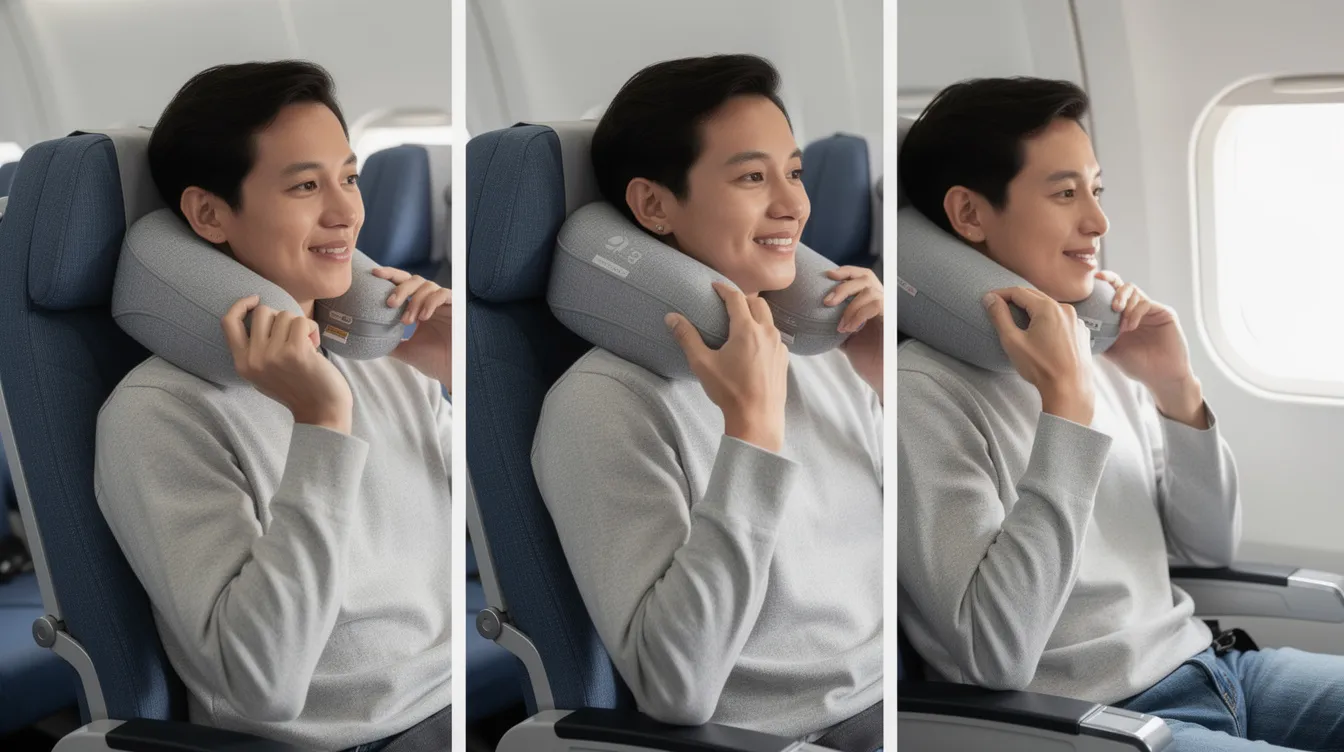
For neck support, micro beads flow to fill the gap between seat headrest and neck, reducing side-to-side wobble and forward head drop. Gaps between microbeads let air move through for cooling airflow, so your neck stays dry even on warm, crowded flights. Microbead pillows can be used for neck support during flights and still feel comfortable after six hours.
For head support, leaning against a window or wall compresses the beads on the contact side while they build up around the edges of your ear and temple. This distributes pressure across a wider area compared to a flat airline pillow or a rigid foam wedge.
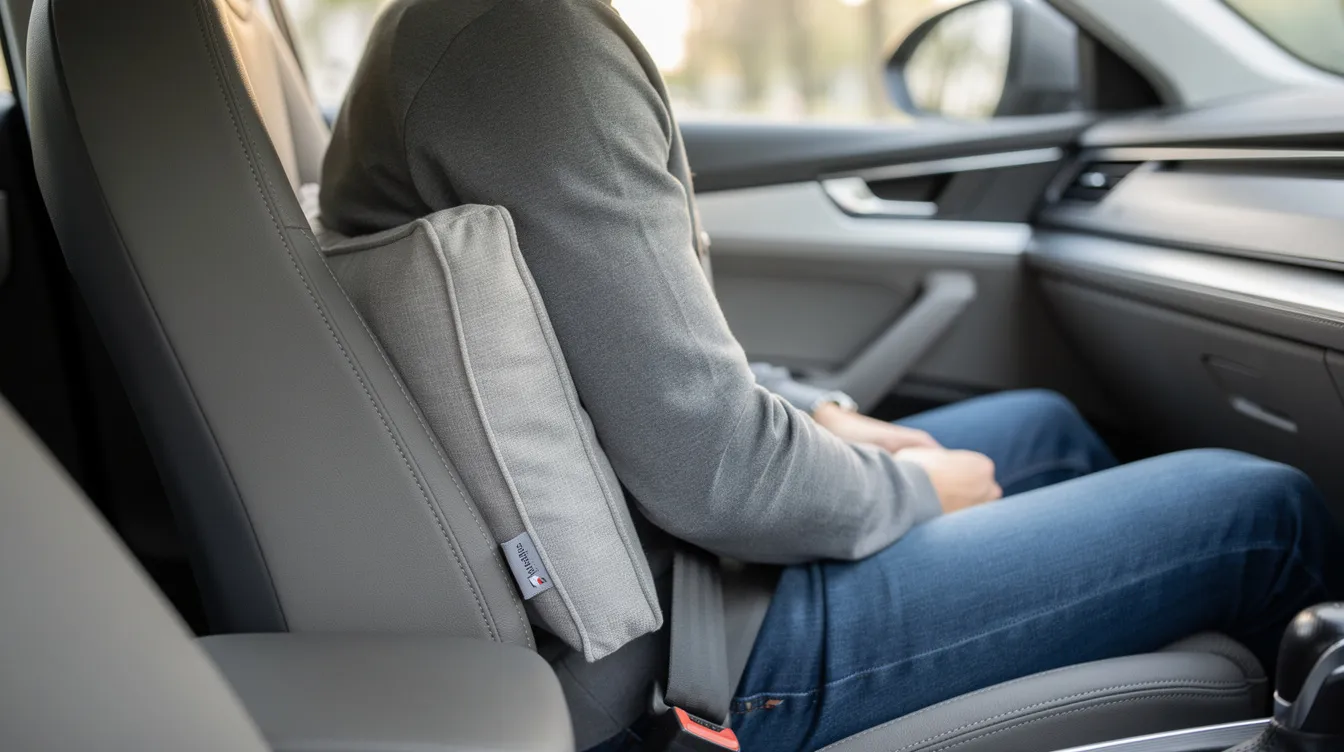
For lumbar support, placing a cylindrical or mini microbead pillow at the small of the back helps maintain a more neutral spine posture during long sitting sessions. They can also serve as lumbar support in cars, tucked between the seat and your lower back.
Microbead pillows are especially comfortable for people with sensitive joints. Those who dislike firm memory foam pressure under the jawline find that microbeads shift away from tender areas instead of pushing back. That said, microbeans conform nicely to users but generally do not provide consistent support the way structured foam does, so travelers who need rigid cervical stabilization should look elsewhere.
How to Choose the Right Microbead Travel Pillow for You
Start with your primary use. Frequent flyers who sleep on planes need a pillow shaped for upright or side-leaning positions. Daily commuters need something that fits in a work bag. Road-trip passengers want back and neck support against car seats.
Size matters. Backpackers and minimalist packers might favor mini microbead pillows like the Travel Fanatics Mini Microbead Pillow. Drivers and car passengers who want full spinal support might prefer longer cylindrical bolsters.
Firmness depends on bead density. More densely packed pillows feel firmer and hold position better; loosely filled models feel squishier but may flatten faster under sustained weight. Choose based on how much structure you want. When choosing a microbead travel pillow, consider fabric breathability and bead density together. A breathable cover paired with dense filling gives supportive comfort without overheating.
Cover preference shapes daily comfort. A dual-surface design (plush on one side, smooth spandex on the other) lets you flip between cozy warmth and cooler touch. A removable cover simplifies washing.
Color is practical, not just aesthetic. Dark grey or black stays looking clean longer; a bright pattern or color helps you quickly find a pillow in family luggage or a shared hotel room.
Build your shortlist using four criteria: shape (U, roll, mini), pack size, desired support type (neck vs lumbar), and fabric feel. Match those to your most common travel scenario, and the right pillow becomes obvious.
Best Uses: Planes, Trains, Cars, and Everyday Comfort
A single microbead pillow can follow you from departure lounge to hotel bed to office chair without taking up meaningful space.
On a plane, it works as a neck pillow in an economy seat, a side cushion wedged between head and fuselage at the window, or a lower-back roll during long flights when seat pitch stays tight. The Standard Microbead Travel Pillow is ideal for flights because it adapts to changing body positions across six to ten hours. Microbead pillows can be used as small comfort pillows during road trips, tucked behind the neck, under the chin, or across the lower back.
In a car or bus, passengers can position the pillow between neck and headrest for resting or slide it behind the lumbar curve to ease tension. A husband driving a long stretch can hand it to a passenger for shoulder support, and both benefit from the pillow at different stops.
Train and subway commuters benefit from mini microbead pillows that slip into a bag or purse. Early-morning or late-night rides become more tolerable with even a few inches of soft cushion between your head and a vibrating window.
At home, microbead pillows can be used for lounging or reading. Place one behind your lower back in a desk chair, under your knees while watching TV, or between your shoulders and a sofa cushion. This all-day versatility is what separates a good choice from a single-use travel accessory.
Here is a concrete example: you pack the pillow in your backpack at home. At the gate, you sit on it as lumbar support. On the plane, you scrunch it under your chin for sleeping. At the hotel, you fold it behind your back in an undersized desk chair. On the return car ride, you roll it under your knees. One pillow, five uses, zero wasted money.
Care, Cleaning, and Longevity of Microbead Pillows
Microbead pillows typically are not fully machine-washable. Submerging the bead chamber in water can cause beads to clump or stress seams. Instead, spot clean the outer shell with mild soap and water, then air dry away from direct heat. Microbead pillows dry quickly if washed or spilled on, since moisture does not absorb into the polystyrene beads the way it soaks into foam.
Microbead travel pillows should have removable and washable covers for hygiene. If your pillow has a removable cover or pillowcase, wash it on a gentle cycle and air dry to preserve elasticity. Avoid bleach or fabric softener, which can break down spandex fibers over time.
Durability depends on construction. Good stitching and quality fabric resist bead leaks for many years. Over time, beads may compress slightly, making the pillow softer and a bit flatter. Shaking and kneading the pillow redistributes the filling and restores some loft.
Storage tips: keep the pillow in a breathable bag rather than sealed plastic, which traps moisture. Avoid stacking heavy items on top during packing. If you will not use the pillow for weeks, store it loosely so the shell fabric does not develop permanent creases.
Microbeads, Environment, and Safety Considerations
Micro beads are a plastic-based filling, and responsible handling matters. Quality microbead pillows are designed with tight, reinforced seams to protect against leaks. Still, users should avoid tearing the cover and keep pillows away from pets or small children who might chew through the fabric.
The U.S. Consumer Product Safety Commission bans pillows loosely filled with granular materials for children under one year of age. For adults with intact covers, microbead pillows are safe for normal use.
Some manufacturers are moving toward plant-based or recycled bead materials. Covers ship in minimal packaging, and a few brands reduce waste by using simple recyclable boxes instead of plastic wrapping. The most eco-conscious step is straightforward: use the pillow for many years instead of replacing it frequently. Donate gently used pillows when possible, and dispose of damaged ones according to local waste guidelines.
How Microbead Pillows Compare on Price and Value
In mid-2026, microbead travel pillows sit in a mid-range price bracket. Microbead pillows are generally budget-friendly compared to memory foam pillows. They are often inexpensive compared to memory-foam options that can run well above $40 for ergonomic models.
Among 140 tracked "microbead pillow" listings on Amazon, the average price for the top 10 selling items was roughly $36.11. Over half of all listings fell between $20 and $50. For reference, the Brookstone Microbead Travel Neck Pillow is priced from $16.99, while the Cloudz Microbead Travel Neck Pillow has 4.4 out of 5 stars and sits in a similar price range. The broader microbead segment represented about $94.58 million in 2025, or roughly 14.26% of the travel neck pillow market, compared to memory foam's 55.81% share.
Value depends on daily use, not sticker price. A $30 microbead pillow used on 50 flights over two years costs $0.60 per flight. A $15 polyester pillow that flattens after ten uses costs $1.50 per use. Reviews and ratings help; customers who leave 5 stars on microbead pillows often cite softness, portability, and multi-use flexibility as reasons.
The Travel Fanatics Mini Microbead Pillow balances compact size, great quality construction, and competitive current price. For frequent travelers, that combination makes it a strong value and a best seller contender in the microbead category.
Tips for Getting the Most Out of Your Microbead Travel Pillow
Do not just wear a microbead pillow in the standard behind-the-neck position. Experiment. Microbead pillows can be adjusted for comfort in various positions, and the filling rewards creativity.
-
Wear a U-shape with the opening to one side instead of under the chin; this cradles your head when leaning toward a window
-
Twist a cylindrical pillow into a figure-eight shape for extra elevation under the neck
-
Fold a mini pillow in half for firmer, more concentrated neck support
-
Pre-shape the beads before resting: push filling down into the area where you need the most support (under the neck curve, behind the lower back, under one cheek)
-
Pair the pillow with slight seat recline and an adjusted headrest; drape a light scarf or blanket over the pillow for added warmth on night flights
-
Clip the pillow to a bag handle using a carabiner or built-in loop so it is accessible without digging through a backpack
-
Place it between your laptop and your lap for a better typing angle, or under your wrists during long work sessions at a café
These small adjustments turn a flexible pillow into a multi-tool. The more positions you try, the faster you find the one that finally lets you sleep on a plane.
Frequently Asked Questions About Microbead Travel Pillows
Are microbead travel pillows comfortable for long flights? Yes. Microbead pillows offer soft, adjustable support that works well for flights lasting 6 to 10 hours. The filling reshapes as you shift between side-leaning and upright positions, and airflow between beads helps you stay cool. Many customers report feeling less stiff at arrival compared to using firm foam or inflatable alternatives.
Are microbead pillows better than memory foam? Microbead pillows are softer and more flexible, while memory foam offers firmer, more structured neck support. The choice depends on preference. If you move frequently during sleep or dislike heat buildup, microbeads are a good choice. If you want a pillow that holds your head in one solid position, memory foam suits that need.
Can I use a microbead pillow for lumbar support? Cylindrical and mini shapes are excellent when placed behind the lower back in cars, planes, and office chairs. Position the pillow horizontally across the small of your back, and the beads fill the lumbar curve to maintain a more neutral spine posture. They can be used for neck, back, or side support depending on how you place them.
Do microbead pillows go flat? Microbead pillows flatten easily and provide low support if the bead count is insufficient or the filling is low-quality. Quality pillows with dense bead packing maintain loft for many years, though beads may compress slightly over time. Shaking the pillow and redistributing the beads restores shape. If your pillow is losing support, check whether the model allows refilling through a hidden zipper.
Are microbead travel pillows allowed in carry-on luggage? Microbead pillows are normally treated as personal comfort items and usually do not count as a separate carry-on. Most airlines allow passengers to carry or clip a pillow to their bag. That said, airline policies vary, so check your carrier's specific rules before your search at the gate turns into a gate-check situation.
Final Thoughts: Is a Microbead Travel Pillow Right for You in 2026?
Microbead pillows provide soft, flexible, moldable support that adapts to how you actually sit and sleep, rather than forcing you into a single fixed position. They stay cooler than memory foam, pack lighter than most structured neck pillows, and work across planes, cars, trains, and everyday relaxing at home.
The ideal user is someone who shifts positions frequently, dislikes very firm pillows, wants a pillow that doubles as back support, or travels often enough that carrying a dedicated pillow pays for itself in comfort. The neck pillow market is projected to grow from $5.36 billion in 2026 to $8.81 billion by 2036, and microbead models are gaining share because they solve complaints that foam and inflatable pillows have not addressed.
The best travel pillow is the one that matches your personal sleep style, budget, and packing preferences. The Travel Fanatics Mini Microbead Pillow is a compact, versatile option worth considering as a first microbead pillow or as an upgrade from older, bulkier designs. Test one on your next trip. Pay attention to how your neck and body feel after arrival. For many travelers, that single flight is enough to sell them on microbeads for good.