
What to Pack for a Fall Road Trip Without Overpacking
Fall road trips bring changing leaves, cooler air, and a specific packing challenge: temperatures that swing 30 to 40 degrees between afternoon and midnight. Whether you're heading to a national park, driving a coastal route with chilly evenings, or taking a weekend trip to visit family, packing for a fall road trip requires managing fluctuating autumn weather without filling your car to the ceiling. About 72% of travelers overpack for road trips, returning home with unworn clothes stuffed in their bags. This guide covers a smart packing strategy built around layers, multi-use pieces, and a realistic packing list so you can avoid overpacking and still feel prepared for the adventure ahead.
Plan Your Fall Road Trip Packing Strategy Before You Touch a Bag
The fastest way to pack smarter is to plan around your actual route, stops, and weather before opening a single drawer. Check the weather forecast for both daytime and overnight temps at each destination along the way. In the Great Smoky Mountains, for example, nighttime lows run 10 to 13 degrees colder than nearby valleys. A coastal route might hold steady in the 50s with mist, while mountain passes can dip into the 30s after dark. Planning should include checking the weather for each stop along the route.
Write down the concrete activities you have planned: a morning hike, a brewery stop, a cabin evening, a city dinner. Build outfits and gear around those activities, not vague what-ifs. Use a checklist to avoid bringing unnecessary items and to avoid forgetting essential items you actually need. Even for longer trips, think in a 4-to-6-day packing rhythm; if laundry is available along the way, you can repeat that cycle instead of hauling two weeks of clothes. A simple, written packing list grouped by categories (clothing, toiletries, car essentials, personal items, food) keeps you honest and prevents last-minute extra piles.
Choose the Right Bag So You Don't Overfill the Car
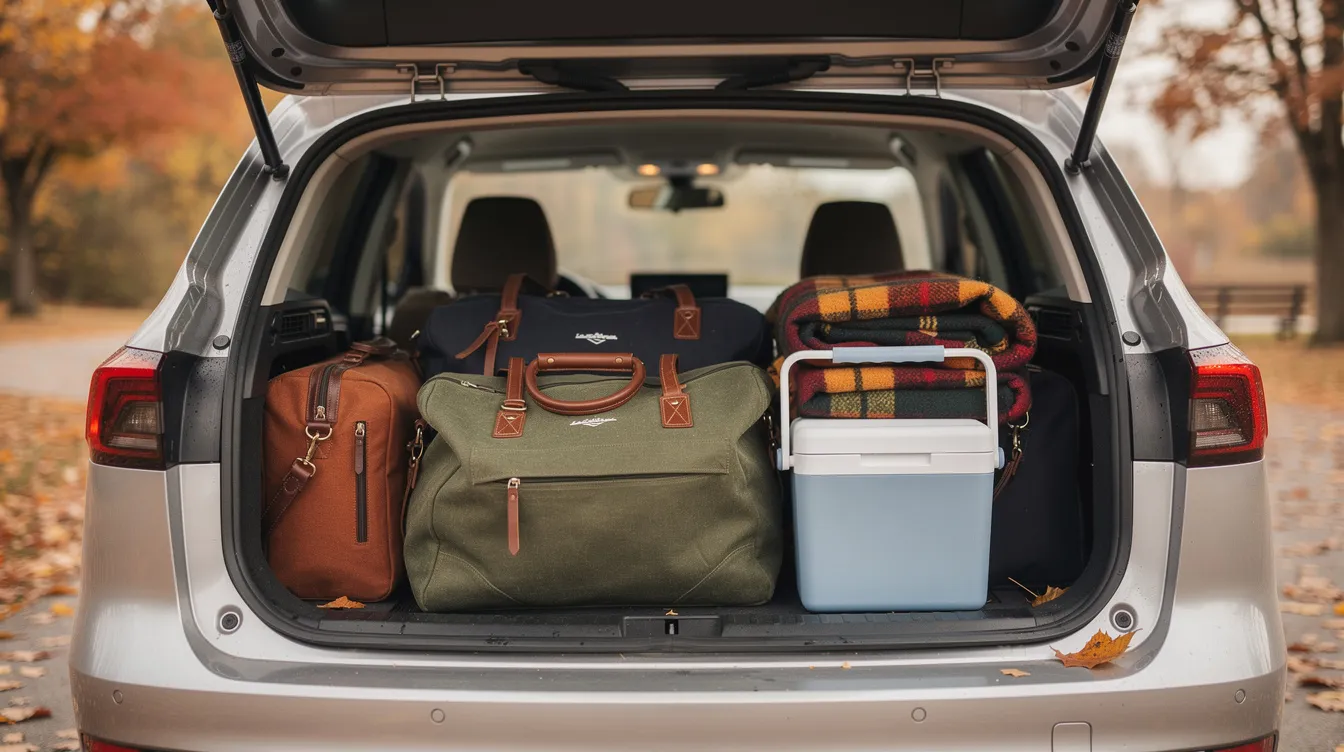
The bag you choose acts as a boundary. Choose a bag that limits your packing capacity, and you solve half the overpacking problem before folding a single shirt. Soft-sided duffels or weekender bags flex into trunk corners better than rigid suitcases. They compress when half-full and are easier to live out of in cabins or motels. Look for the right bag with a separate shoe compartment, a couple of interior pockets for underwear and socks, and an easy access pocket for sleepwear and layers.
One main bag per adult plus a small personal items bag keeps the car floor and seats clear. Pack a small bag with essentials that are needed frequently during the trip: phone charger, snacks, and your toiletry bag. Packing cubes help compress clothes and save space inside a compact duffel without encouraging you to bring more than you need. Three or four cubes (one large for tops, one medium for bottoms, one small for undergarments) keep categories visible so you know exactly how much you have packed.
Build a Fall Capsule Wardrobe: Layers That Work Hard
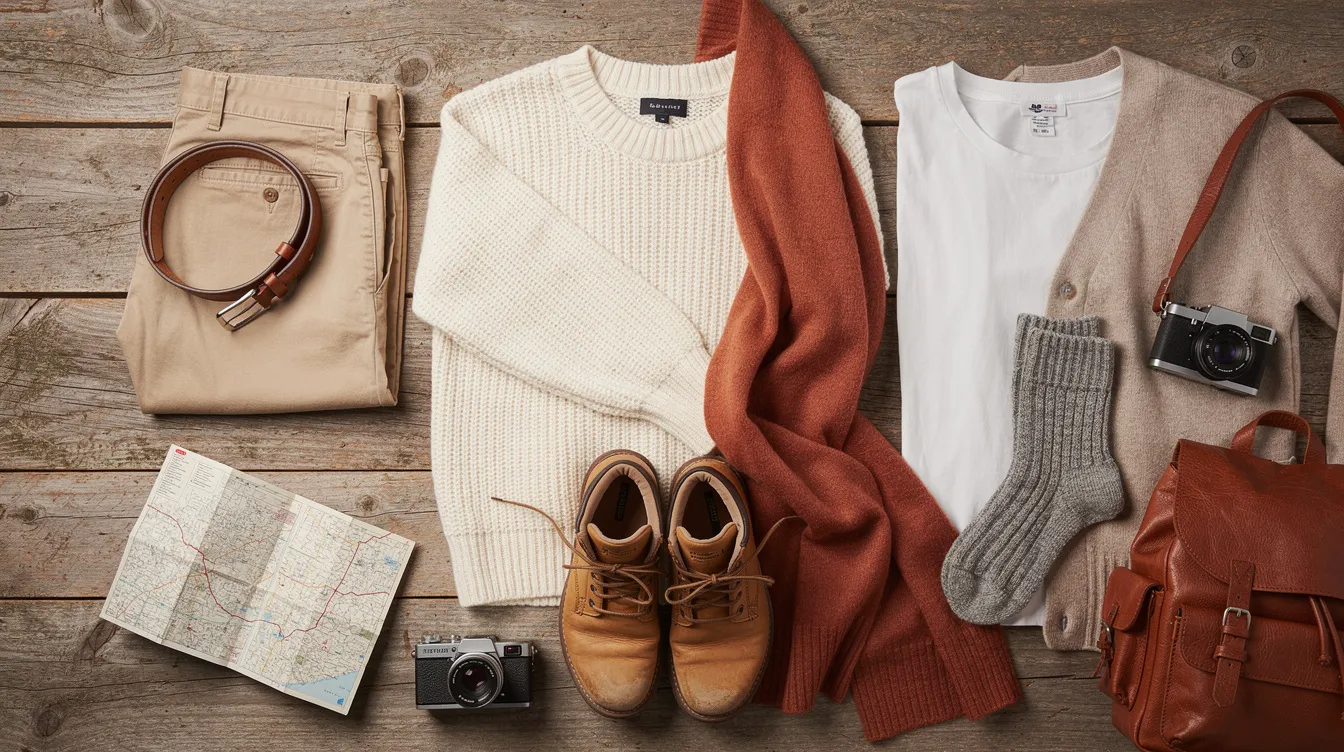
A capsule wardrobe is a tight, mix-and-match set of versatile clothing that covers a range of temperatures without a huge stack of outfits. A capsule wardrobe allows for multiple outfit combinations from a small number of pieces. Start with a shared neutral color palette: black, navy, gray, or olive, plus one accent like rust or burgundy. When every top works with every bottom, you eliminate the need for separate "dressy" color sets.
For a 4-to-6-day fall road trip, a realistic clothing framework looks like this: two pairs of pants (one denim, one quick-dry or stretchy), one pair of leggings or joggers, three to four tops (a mix of t shirts and long sleeves), one sweater or fleece, one flannel or shacket, and one outer layer. REI's packing guidance suggests 5 to 6 pairs of underwear and 5 pairs of socks for a week with laundry access, which aligns well with this framework.
Focus on layering to adapt to changing temperatures during a fall road trip. The system is simple: breathable base layers against your skin, a cozy mid-layer like fleece or wool, and a windproof or water-resistant light jacket as the shell. Layer clothing to adapt to changing weather conditions throughout the day. Jeans and outer layers can be worn multiple times. Pack only three of each essential clothing item (three bottoms, three to four tops, three outer/mid layers), and you have enough flexibility without stuffing the bag. Multi-purpose items save space; a flannel works as a mid-layer on the trail, a shirt at dinner, and a blanket substitute in the car.
Clothing by Activity: Pack Outfits, Not a Closet
Planning outfits around specific fall road trip days prevents duplicates and clutter. Packing by outfit means each piece serves a clear purpose. A "long drive" outfit might pair soft joggers with a long-sleeve tee and a light jacket within arm's reach. A "trail plus coffee shop" day could combine quick-dry hiking pants, a merino base layer, and a flannel. A "casual dinner" look works with dark jeans and a sweater you already packed for layering.
If a clothing item doesn't clearly belong to at least two planned outfits, it probably doesn't earn a place in the bag. Include one dedicated sleep outfit and one set of comfy clothes for evenings so you aren't tempted to toss in several extra loungewear sets. Laundromats, cabin washers, or hotel laundry allow a smaller rotation of clothes even on longer trips, which helps you pack lighter and keep more space in the car for things that matter.
Shoes and Outerwear: Keep It to the Essential Items
Bulky shoes and jackets are where overpacking starts on many fall road trips. A simple shoe strategy keeps it manageable: one pair of comfortable walking or light hiking shoes, and one pair of versatile casual boots that work for both day trips and dinners. Avoid high heels and single-purpose dress shoes unless there is a specific event on the itinerary. Wear bulkiest clothing and shoes while traveling to save space in the vehicle; your hiking boots go on your feet, not in the trunk.
One well-chosen jacket beats packing a separate coat, rain shell, and heavy parka. A lightweight insulated or fleece-lined jacket that is wind and water resistant handles most fall conditions. Keep a compact packable down vest or thin fleece within reach for quick temperature changes at overlooks or rest stops. That setup covers you from a 65-degree afternoon to a 35-degree evening without eating half your trunk.
Streamline Your Toiletry Bag and Personal Items
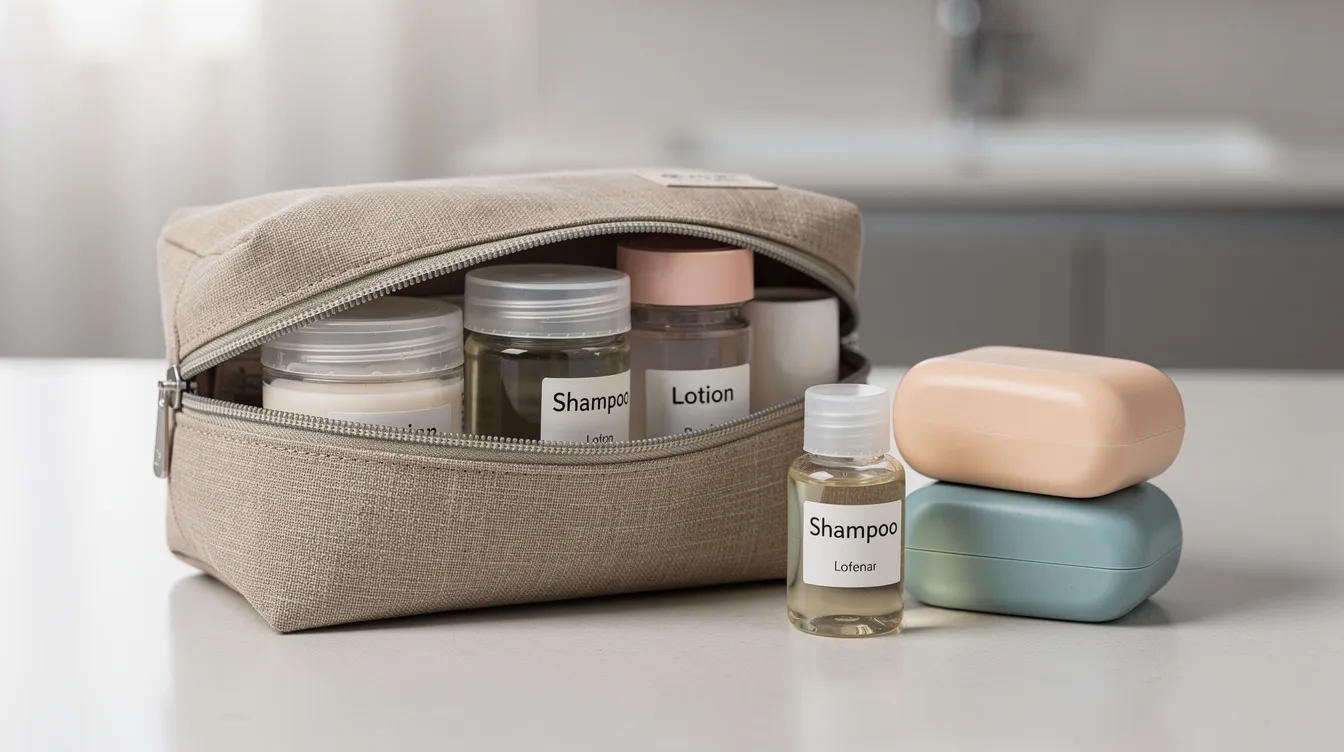
Full-size bottles and "extras" in a toiletry bag are a quiet source of overpacking on road trips. There's no airline liquid rule on the open road, but that freedom often leads to hauling a pharmacy-sized collection. Use travel-size containers for toiletries to save space: cleanser, moisturizer, SPF, deodorant, and any prescription medications in small refillable bottles. Pack toiletries in a waterproof pouch to prevent leaks.
Solid toiletries eliminate the risk of leaks during travel entirely. Solid shampoo, conditioner bars, and sunscreen sticks weigh less, take up less room, and never burst in your bag. Core personal items to prioritize: toothbrush, toothpaste, razor, basic grooming kit, hairbrush or comb, hair ties, pain relievers, and a tiny first aid stash (bandages, antiseptic, blister pads) for minor issues. Don't forget bug spray if your route passes through wooded or marshy areas.
Keep a small dopp kit ready with grooming essentials year-round so it just moves from trip to trip instead of getting rebuilt (and bloated) each time. Add a phone charger, power bank, lip balm, tissues, and hand sanitizer to a separate always-ready personal items pouch. These specific toiletries and tech items stay packed between trips, saving you prep time and preventing the "better throw that in too" spiral.
Road Trip Essentials: Safety, Comfort, and a Roadside Emergency Kit
While the goal is to avoid overpacking clothes and extras, certain essential items for car safety are non-negotiable. A roadside emergency kit should be easily accessible in the trunk at all times. Pack jumper cables and a spare tire for emergencies. Add a tire inflator or small air compressor, a tire pressure gauge, and a reflective triangle. A roadside emergency kit should include a flashlight and multi-tool. A well-stocked first aid kit is crucial for safety; the AAA emergency kit guidelines recommend including bottled water, non-perishable snacks, a blanket, and gloves as well.
Fall-specific safety extras matter if your route crosses higher elevations: an ice scraper, warm gloves, windshield washer fluid for frosty mornings, and a compact blanket. Check that your driver's license, insurance details, and roadside assistance contact info are current. A reliable GPS navigation system is essential for road trips, but also download offline maps for remote stretches where cell service drops. Keep a travel journal or notes app handy to log gas stops and mileage for budgeting. A printed map or atlas adds peace of mind when your phone can't find a signal; it could keep you from turning a flat tire situation in a dead zone into a disaster zone.
Keep all safety gear together in a dedicated bin or bag in the trunk so everyone knows where it is and it doesn't sprawl across the cargo area.
Comfort on Long Drives: Small Items That Make a Big Difference
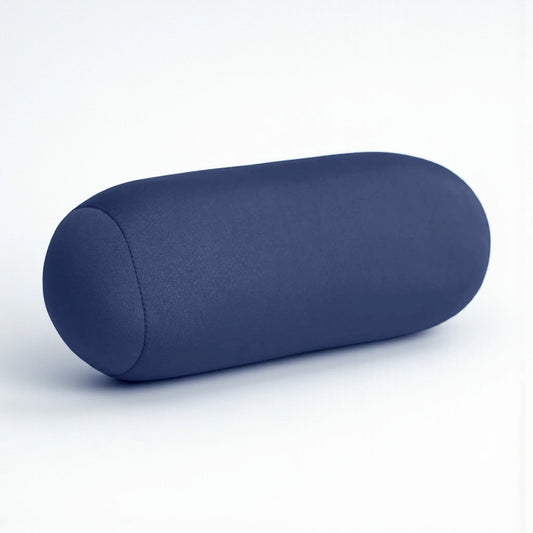
A few small items transform long stretches of highway from tiring to enjoyable without eating trunk space. One compact travel blanket or large scarf doubles as extra warmth for passengers and a picnic throw at roadside overlooks. For neck support during passenger naps or better posture during hours behind the wheel, the Travel Fanatics Mini Microbead Travel Pillow is a flexible, compact travel pillow that molds between seats and packs flat when not in use.
Keep a driver's command center for easy access to essentials: sunglasses, tissues, hand wipes, lip balm, and a reusable water bottle all within arm's reach of the driver and front passenger. Use seat-back organizers to keep essentials accessible for rear passengers too. Include hydration and snacks that are easy to access during drives so nobody has to dig through the trunk mid-journey. A simple routine helps on longer days: stretching every couple of hours at rest stops, swapping drivers when possible, and doing a quick seat and console tidy so clutter doesn't build up. These habits keep your vehicle tidy and your energy levels steady across long drives.
Food, Drinks, and Car Organization for Fall Road Trips
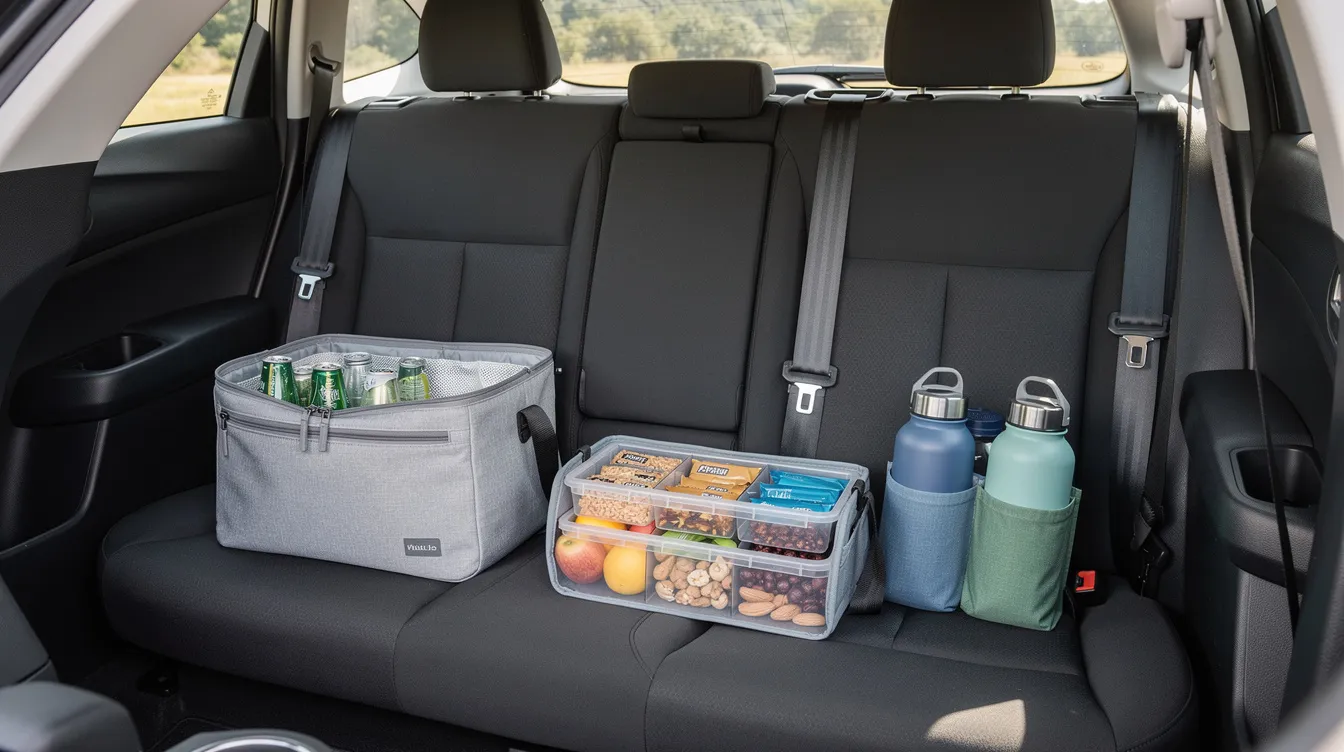
Smart food planning prevents constant gas-station stops, helps you save money, and keeps the car cleaner. Invest in a cooler to keep perishable items fresh: yogurt, cheese sticks, cut veggies, and premade sandwiches. Use frozen water bottles as ice packs in your cooler; they double as cold drinking water as they thaw. A reusable tote or bin beside the cooler holds non-perishables. Pack fresh fruits, trail mix, and granola bars for snacks. Healthy snacks like trail mix and granola bars keep hunger managed between stops without forcing detours. Avoid messy foods to keep your car clean during travel; chips with dip, chocolate in warm compartments, and saucy wraps create problems on upholstery.
A refillable water bottle for each traveler plus a larger jug in the trunk strikes a balance between staying hydrated and not filling the car with single-use plastic. Pack reusable utensils and plates to reduce waste, especially if you're picnicking at overlooks or trailheads.
For car organization, think modular. Organize your vehicle with modular packing for efficiency: trunk bins or baskets for bags, one seat-back pocket per person for small personal items, and a clear rule that walkways and footwells stay open. This layout makes loading and unloading at each stop simple and keeps the car from becoming a rolling storage unit. A $10 to $15 grocery haul at a local farmers' market or roadside stand often covers lunch and snacks for two people in rural fall regions, so you can save money and eat seasonal produce along the way.
How to Pack Smarter and Stay Light the Entire Trip
How you place items in the car matters as much as what you pack. A simple packing layout keeps everything findable: heavy bags and the roadside emergency kit sit against the back seats, lighter bags stack on top, and one small overnight bag or tote with first-night essentials (pajamas, toiletries, charger) stays easily accessible without unloading the whole trunk.
Keeping worn clothes separate from clean ones prevents that mid-trip moment where everything smells like yesterday's hike. The Travel Fanatics Travel Laundry Bag is a lightweight, packable solution that keeps dirty laundry contained without adding bulk. Stuff it in your duffel when empty; pull it out as clothes accumulate.
A "one in, one out" rule during the trip keeps things balanced: if you buy a bulky souvenir or an extra layer at a local shop, retire or compress something else so the car doesn't gradually overflow. Packing efficiently from the start gives you more space for what you pick up along the journey. A focused packing strategy, thoughtful fall layers, and a lean set of essential items make room for what matters most on the open road: the scenery, the conversations, and the freedom to stop wherever the route looks interesting. That's the real game changer.