
How to Pack Dirty Clothes for a Weekend Trip
Nobody wants to arrive home from a vacation only to discover that their clean clothes now smell like yesterday's gym socks. Knowing how to pack dirty clothes for a weekend trip is a small skill that makes a surprisingly big difference in how organized, fresh, and stress-free your travel feels from start to finish.
Answering the Basics: How to Pack Dirty Clothes for a Short Trip
The easiest system comes down to three things: one dedicated dirty laundry bag, basic odor control, and smart placement inside your luggage. A lightweight laundry bag provides designated storage for dirty clothes and keeps them fully isolated from everything else in your suitcase. Bring an extra bag for dirty clothes during travel so you always have a backup if one gets damp or full.
Even for a two- or three-night trip, planning where dirty laundry will go is just as important as planning your outfits. The goal is simple: keep dirty clothes completely separated from clean clothes, contain odors and moisture, and make unpacking at home faster. When you pack light and think through your dirty-clothes strategy before you leave, a messy rolling suitcase or overstuffed backpack transforms into an organized setup that works from departure to the washing machine.
Start Smart: Plan for Dirty Laundry Before You Leave
Planning for dirty laundry starts while you are still at home, not once you have worn the first outfit. A few minutes of preparation before departure saves real headaches later.
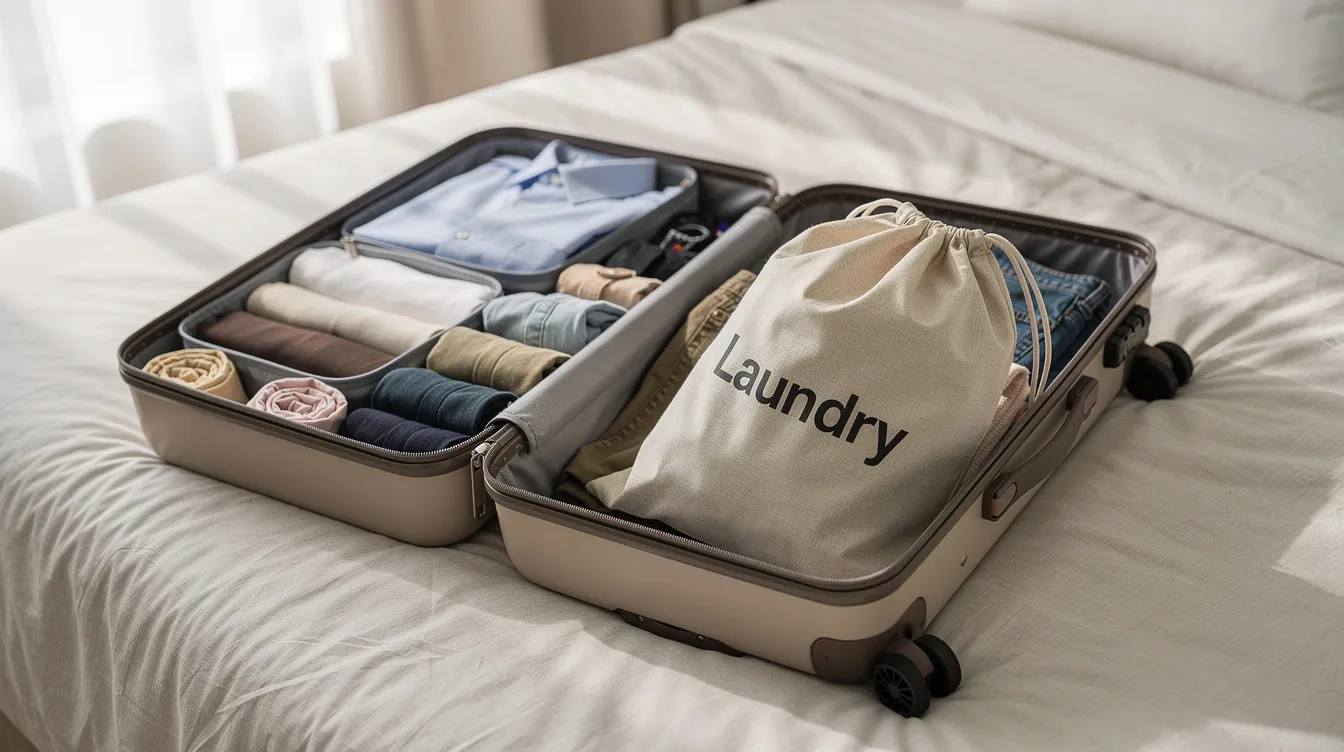
Choose a suitcase or weekender bag with at least one separate compartment or exterior pocket that you can reserve exclusively for dirty clothing on the way back. If your bag does not have built-in sections, a simple drawstring pouch or mesh bag solves the problem. Bring an extra mesh bag for dirty laundry so you have flexibility for different types of items.
To pack light effectively, plan a weekend capsule wardrobe: two tops, one pair of pants or shorts, one spare outfit, and minimal gym wear. Pack enough socks and underwear for each day of your trip so you never have to guess whether something is still wearable. Stuff smaller items like socks into shoes to maximize space inside your bag. At the packing stage, toss in a few compact helpers: a travel size fabric spray, a couple of dryer sheets, or a small scented sachet. These weigh almost nothing and pay off later when odor control matters most.
Separate Dirty Clothes from Clean Clothes the Easy Way
Once the trip has started, clean and dirty clothes should never share the same space in your bag. Letting worn clothing mix with fresh outfits wastes space, causes smells to spread, and slows down unpacking. Each time clothes are removed, they should be put directly into the laundry bag rather than tossed onto the floor, a chair, or the hotel bed.
Turn worn clothes inside out before putting them in the bag to hide lint and skin contact, which also helps keep the outer fabric cleaner for any rewear decisions later. Packing cubes with a compression side separate dirty garments from clean outfits effectively. Store the laundry bag at the bottom of your suitcase, inside a compression cube, or in an outer compartment to keep it away from clean pieces.
In tiny accommodations like hostels, small hotel rooms, or van life setups, the dirty clothes bag can hang on a door hook or bathroom towel rack. If you are staying in a room with limited floor space, a collapsible basket in a corner keeps everything corralled without creating a pile on the ground.
Handling Damp, Sweaty, or Wet Clothes on a Weekend Trip
Damp gym gear, swimsuits, and sweaty socks are the main risk for smells and mildew on a short trip. Wet clothes should be dried before longer storage to avoid odors, and that principle applies whether you are dealing with a post-run t shirt or a beach towel.
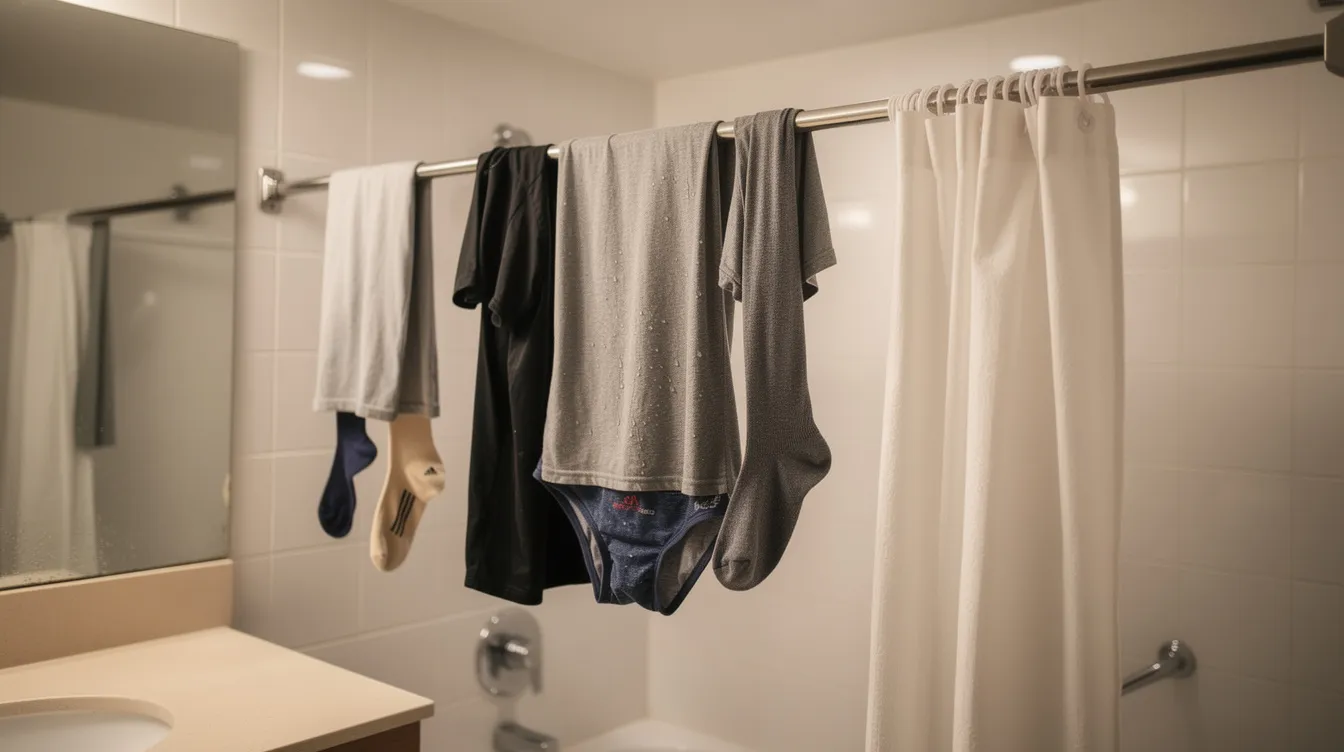
Air drying comes first. Hang damp items over a towel rack, shower rod, door hook, or balcony chair before sealing them away. Even twenty to thirty minutes of air exposure significantly reduces odor-causing bacteria. If you have access to a hairdryer, you can use it cautiously on low heat to dry small areas like waistbands or armpits before packing.
For truly wet items like swimsuits, use a waterproof pouch or a plastic bag. Plastic grocery bags act as a waterproof barrier for damp items in a pinch and are free to grab from nearly any store in town. Leave these bags slightly unsealed if possible to allow some airflow and reduce mildew buildup. Separate wet items to prevent mildew in luggage by keeping them in their own dedicated pouch, away from everything else. After a morning run, air your workout clothes briefly in the bathroom, then move them to a dedicated section in the laundry bag or a separate small pouch.
Preventing Odors: Simple Tricks That Actually Work
Odor control is as important as separation when packing dirty clothes for the trip home. Without it, one hot evening of walking around restaurants can leave your entire suitcase smelling sour.
Sprinkle a small amount of baking soda into the bottom of the laundry bag before the trip, or carry a travel size fabric spray to mist items lightly before sealing. Scented dryer sheets neutralize odors in dirty laundry effectively, so tuck one or two inside the bag alongside a small fabric sachet. Airtight bags prevent odors and moisture contamination, making them useful for particularly strong-smelling items like workout gear.
Let clothes breathe briefly before sealing them, especially after exercise or a hot day. Research on bacterial growth shows that trapping moisture in a sealed non-ventilated space for more than twelve to twenty-four hours causes significant odor buildup. Quick spot-washing under a sink, like rinsing armpits or collars, and fully drying items before packing keeps the rest of the suitcase fresher throughout the trip.
Using Travel Laundry Bags and Collapsible Baskets
Purpose-made laundry organizers keep a weekend trip tidy without adding bulk or weight. Using a dedicated laundry bag helps isolate dirty clothes during travel and creates a clear boundary between what is clean and what is not.
The Travel Fanatics Travel Laundry Bag is a good example of a lightweight, packable option that lives flat at the bottom of a suitcase on the way out and holds all your dirty clothes on the way home. Breathable bags prevent odors from trapped moisture in clothing, so look for materials that allow some airflow rather than fully sealed plastic. Start the trip with the bag empty and folded. Each night, move worn items straight into it instead of mixing them with unworn pieces.
For hotel rooms or vacation rentals, the Travel Fanatics Collapsible Travel Laundry Basket acts as a central drop zone where everyone can toss dirty laundry in one place before sorting it into bags. Both tools support packing light by keeping what you have worn clearly separate from what you can still wear, making mid-trip outfit decisions easier and faster.
Packing Dirty Clothes Efficiently for the Trip Home
The return journey is when your bag is fullest and least organized, unless you have a plan. Pack heavier items like jeans and sweatshirts at the bottom of the laundry bag, and lay lighter pieces like t shirts and underwear on top.
Roll clothes to save space in your suitcase, and the same applies to dirty items. Rolling dirty garments compresses them to maximize luggage space without creating a disorganized pile. Fold or roll gently inside the laundry bag to keep everything contained and easy to transfer to the washer at home. Compress laundry bags for easy removal upon returning home so you can lift the whole thing out in one motion.
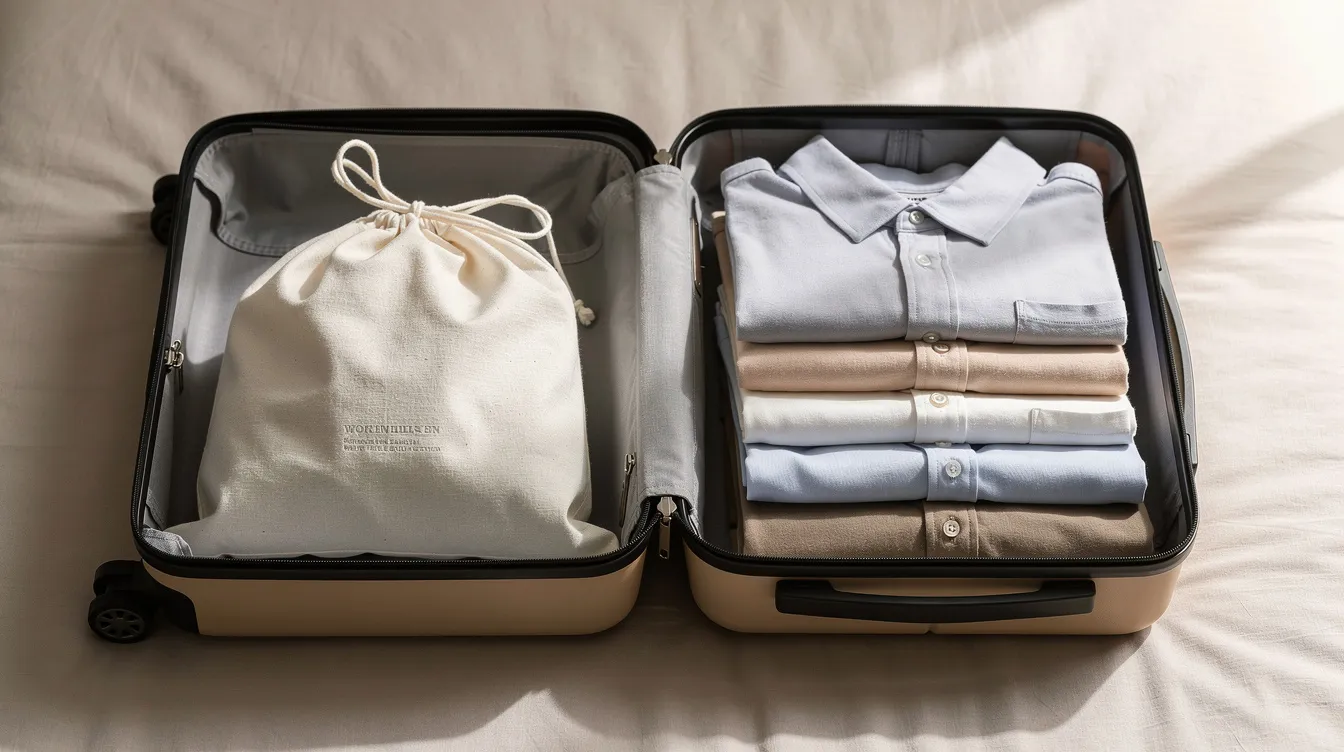
Position the packed laundry bag at the base of your suitcase or upright along one side. Layer remaining clean clothes and toiletries away from it. Use a waterproof bag for toiletries to prevent leaks from contaminating either clean or dirty clothing. This setup makes unpacking at home dead simple: lift out the bag and drop everything straight into the washing machine or hamper.
Quick Washing Clothes on the Road (When You Really Need To)
On some weekend trips you might need to wash one or two key items, like a favorite top or kids' clothes, before heading home. Consider laundry options when choosing accommodations, since some hotels offer coin-operated machines or a laundromat might be a short walk away. You can also use laundry services to manage dirty clothes while traveling if you are committed to keeping your bag light.
For a basic sink wash, use gentle soap or travel detergent. Soak, lightly agitate, rinse thoroughly, and gently press water out with a towel. Hang items over the shower rod, a door, or a balcony chair. Speed up drying with a towel-roll-and-squeeze method: lay the item flat on a towel, roll them together tightly, and press out moisture.
Prioritize washing small, quick-drying pieces like underwear, socks, or lightweight shirts rather than bulky stuff. Having a dedicated laundry bag keeps partially dry items away from fully clean outfits, even if they are not perfectly fresh yet. You do not need to wash a whole load to make a difference.
Family and Group Trips: Keeping Everyone's Dirty Laundry Under Control
A simple system is essential when multiple people are tossing dirty clothes into the same space on a weekend getaway. Without structure, you arrive home to a tangled bunch of everyone's worn clothing with no idea what belongs to whom.
Assign each traveler their own small laundry bag, or use one main bag with color-coded packing cubes for each person. Use mesh bags to organize clothing by type so that kids' muddy clothes end up in one section, adults' workout gear in another, and everyday outfits in a main compartment. A collapsible travel laundry basket can sit in a corner of a vacation rental and act as a central drop zone, which is especially helpful with kids who tend to throw things on the floor.
Set the rules before departure so everyone knows where dirty laundry goes from the first morning. This structure makes it faster to load washing machines when you return home and eliminates the challenge of sorting through a massive, mixed-up pile after a busy family weekend.
From Suitcase to Washing Machine: Unpacking Dirty Clothes at Home
Good dirty-clothes packing pays off the moment you walk through your front door. Unpack your suitcase within twenty-four hours of returning home to prevent that post-trip laundry pile from becoming a week-long commitment.
The ideal routine: take the laundry bag straight from your suitcase to the washing machine or hamper, empty it, then let the bag air out or wash it if needed. Pre-sorting clothes saves organization effort upon unpacking. If you used only one bag, sort as you unload: light versus dark, delicate pieces, and any items that need stain treatment before they go in the wash.
Keeping dirty laundry contained on the trip speeds up the post-trip reset and makes weekend travel feel less chaotic. You do not have to pay for that stress. A simple system for dirty clothes, planned before you leave, keeps your weekend trips lighter, fresher, and easier from the moment you prepare your bag to the moment you unpack it.